Everybody is talking about AI.
AI (Artificial Intelligence) has found its way onto our computers, our phones, our online searches and our interactions with customer service. It seems as if every technology company now advertises “AI” as part of their product. Indeed, some are portraying AI as a constant companion, ready to help at a moment’s notice with any of life’s challenges.
The recent explosion in the presence of AI betrays the fact that AI has been around for quite some time and has been in development for many years. But the relatively recent introduction of “Generative AI”, a type of artificial intelligence that creates new content—such as text, images, music, or code—based on patterns it has learned from existing data, has put AI into the forefront of our digital interactions. The most well-known Generative AI platform is Chat GPT, although there is a plethora of others in use today.
Words & Photos by Michael Salvarezza & Christopher P. Weaver
Simultaneously, underwater photographers have seen the development of a wide variety of cameras for capturing images of the marine world they are encountering while diving. Whether it is an expensive DSLR in a dedicated housing, a lighter-weight mirror-less camera, a point and shoot system or an iPhone in a housing, today’s divers can enjoy the process of making and sharing images of their dive adventures more easily than ever before.
But how can you make better use of the hundreds, perhaps thousands, of images you are creating underwater? How can you distinguish your work from the work of so many other divers who are also posting their latest images to social media on a daily basis?
In short, can you use AI to extend the reach of your photography and attract the attention of different audiences from the traditional one used to seeing underwater images?
Since Generative AI has the ability to create new content, it can be used to create brand new images based on directions (or prompts) given to it by a user. We wanted to explore a different angle, though, by asking AI to modify our existing underwater images.

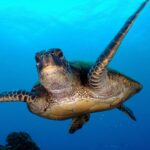
Loggerhead Sea Turtle photographed in Aruba
Suppose, for example, that you had a stunning image of a sea turtle. The original we included in this article was a loggerhead turtle photographed on a reef in Aruba. What if you wanted to share this with children with the purpose of interesting them in marine life? Everyone knows that cartoons are often used to connect with children, so what if we used AI to transform the Loggerhead Sea Turtle into a cartoon? We used the most basic level of ChatGPT for the purposes of illustrating this article and using a simple prompt that read “Turn this picture into a cartoon” we created the cartoon version of the turtle. Instantly, we have found a new use of our original image. Indeed, we could create an entire children’s book and illustrate it with cartoon versions of our photographs.

ChatGPT rendered the sea turtle image as a cartoon
If we wanted to create a scarier version of our Sea Turtle, we can instruct ChatGPT to alter the image to be more menacing. The resulting image could pass as a villain in the story in a children’s book!

The friendly turtle is turned into a scary monster
Maybe the audience you are trying to reach is not children but people interested in fine art and paintings. Using ChatGPT, we rendered the same Sea Turtle in two different artistic styles: Impressionist and Van Gough style. The resulting images are a completely different re-imagining of our Loggerhead Sea Turtle. They would make for interesting wall hangings, and perhaps there are others who might also find them to be compelling as art work.

The turtle photograph turned into a Van Gough style painting

We asked ChatGPT to render the turtle as an impressionist painting
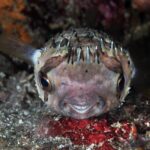
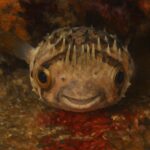
An image we created of a Porcupine Pufferfish in the Sea of Cortez was easily transformed into an expressionist style painting. Exploring further, we asked ChatGPT to render this same image as if Salvador Dali had painted it: the resulting surreal image represents yet another way of looking at this intriguing fish.

The Pufferfish rendered in the Expressionist style
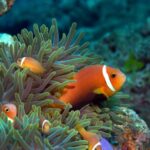
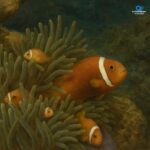
And a very nice image of Anemonefish taken on a reef on the southern atolls of the Maldives is remade as a painting done in the style known as “realism”. Both the original photograph and the new AI rendering are visually intriguing.

Anemonefish from the Southern Atolls of the Maldives

The Anemonefish rendered as a painting in the realism style
The beauty of using Generative AI in this way is that the software is extremely sophisticated and is constantly learning from the massive amounts of data on the internet, meaning that the uses of this software to extend the reach of your photography is limited only by your imagination.
For example, maybe diving is of great interest to you but not to your teenage child who is more interested in games, comics and superheroes. Trying to interest them in the underwater world may require a different approach. Using ChatGPT, we created a superhero themed version of a diver exploring the crystal-clear waters of Silfra in Iceland.

A diver in Iceland’s Silfra fissure

The diver from Iceland transformed to a superhero comic book character
We even wanted to have a bit of fun and used an image of a shrimp photographed in Lembeh, Indonesia as the model for a movie poster designed as a 1950s-era Science Fiction movie. The result from ChatGPT, which created the fictional movie title and inserted the screaming actress by itself, is amusing!

A beautiful shrimp photographed in Lembeh, Indonesia

ChatGPT created this faux sci-fi movie poster using the shrimp from Indonesia
Finding ways to reach different audiences with your photography is challenging. Using AI to re-envision how our images are seen by others may open a new world of possibilities for underwater photographers.
What about digital post-processing? Every underwater photographer knows that most times the original image captured by the camera needs some “cleanup” on the computer to enhance the picture or remove imperfections. Software programs such as Photoshop are the gold standards for this type of work, but they can be expensive and complicated. Can Generative AI perform the same functions as the digital postprocessing software?
The short answer is “maybe” and “it depends”.
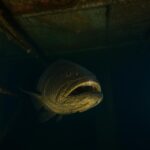
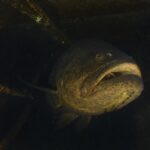
Generative AI often does exactly what it is designed to do: generate new content. This is important as we look to clean up our images. For the purposes of this article, we took an original image of a Goliath Grouper photographed on a shipwreck off Destin, Florida and asked ChatGPT to clean it up. The specific instruction we used was to “clean up the image by adjusting the colors, sharpening the focus and removing backscatter”. As you can see, the AI generated a very nice rendering of the Goliath Grouper as a result.

A Goliath Grouper image from the Florida Panhandle that needs cleaning up

ChatGPT adjusted the original image to clean it up
Words & Photos by Michael Salvarezza & Christopher P. Weaver
But be careful: look very closely and you’ll notice the spot patterns on the fish are different from the original, the eye looks different and the teeth in its mouth have been altered. Even a small starfish clinging to the roof of the wreck has been changed.
The caution we are raising here is that the cleaned-up image of the Goliath Grouper is nice but it is not the original fish. If you are interested in accuracy, or are using your photography to document marine life (for example), the resulting images from AI post-processing may not be what you are looking for and may not be valid or appropriate for your purposes. Proceed with caution!
Finally, it is important that all photographers pay attention to the ethics of all of these new capabilities. As new technology emerges, new legal and ethical questions arise: Who is the “author” of content created by Generative AI platforms? Can these resulting images be copyrighted? What obligations do photographers have to disclose that AI was used in the altering of an image?
For example, when creating “artistic” versions of your original photographs, current U.S. Copyright law states that if you created it yourself (e.g., you used an AI tool to render your photo as a painting), you generally own the rights to that image, as long as the AI tool’s terms of service give you those rights. Most major AI art tools (including ChatGPT) state in their terms that you own the output you create — including when it’s based on your own photo. In the U.S. (and most countries), AI-generated works alone can’t be copyrighted by the AI, but if you make meaningful creative choices — like selecting the style (e.g., “realism,” “Van Gogh”, etc.), composition, prompts, edits, etc. — that human involvement can give you copyright in the resulting image.
We believe that the ethical landscape of using these platforms is rapidly evolving. In many ways, today’s software is akin to the canvas and paintbrushes used by traditional artists. As such, and as stated above, as long as the original image the resulting art is based on is yours, you should “own” the computer-generated rendering. But using someone else’s material as a source without their permission is obviously unethical, even if it is being transformed into an artistic version. And in all cases, photographers should disclose when their images have been adjusted by AI before they are submitted for use other than for personal purposes (e.g., magazine work, scientific data, etc.).
Generative AI opens an entirely new and virtually limitless world of possibility for the use of your underwater photography. Extending the reach of your images can be rewarding and meaningful, especially if you are able to inspire others to care about our beautiful, and fragile, underwater world.
And besides, it’s just fun!
Words & Photos by Michael Salvarezza & Christopher P. Weaver
-
- ChatGPT adjusted the original image to clean it up
-
- A Goliath Grouper image from the Florida Panhandle that needs cleaning up
-
- Loggerhead Sea Turtle photographed in Aruba
-
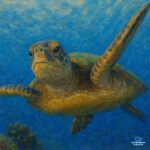
- We asked ChatGPT to render the turtle as an impressionist painting
-
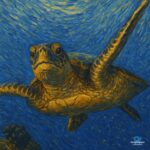
- The turtle photograph turned into a Van Gough style painting
-
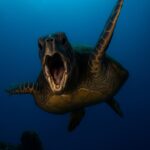
- The friendly turtle is turned into a scary monster
-
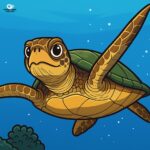
- ChatGPT rendered the sea turtle image as a cartoon
-
- Anemonefish from the Southern Atolls of the Maldives
-
- The Anemonefish rendered as a painting in the realism style
-
- A Porcupine Pufferfish in the Sea of Cortez
-
- The Pufferfish rendered in the Expressionist style
-
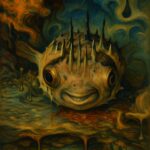
- ChatGPT created this surreal looking version of the pufferfish
-
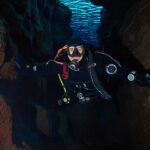
- A diver in Iceland’s Silfra fissure
-

- The diver from Iceland transformed to a superhero comic book character
-
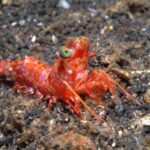
- A beautiful shrimp photographed in Lembeh, Indonesia
-
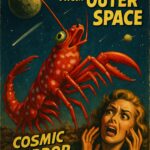
- ChatGPT created this faux sci-fi movie poster using the shrimp from Indonesia