In the opening scene of Pirates of the Caribbean: The Curse of the Black Pearl Captain Jack Sparrow, portrayed by Johnny Depp, arrives into the harbor of Port Royal on a sinking boat and smoothly steps onto an awaiting dock just as his ship slips below the water. The expertly filmed sequence introduced Depp’s character to the world and launched what is arguably one of the most successful movie franchises in history.
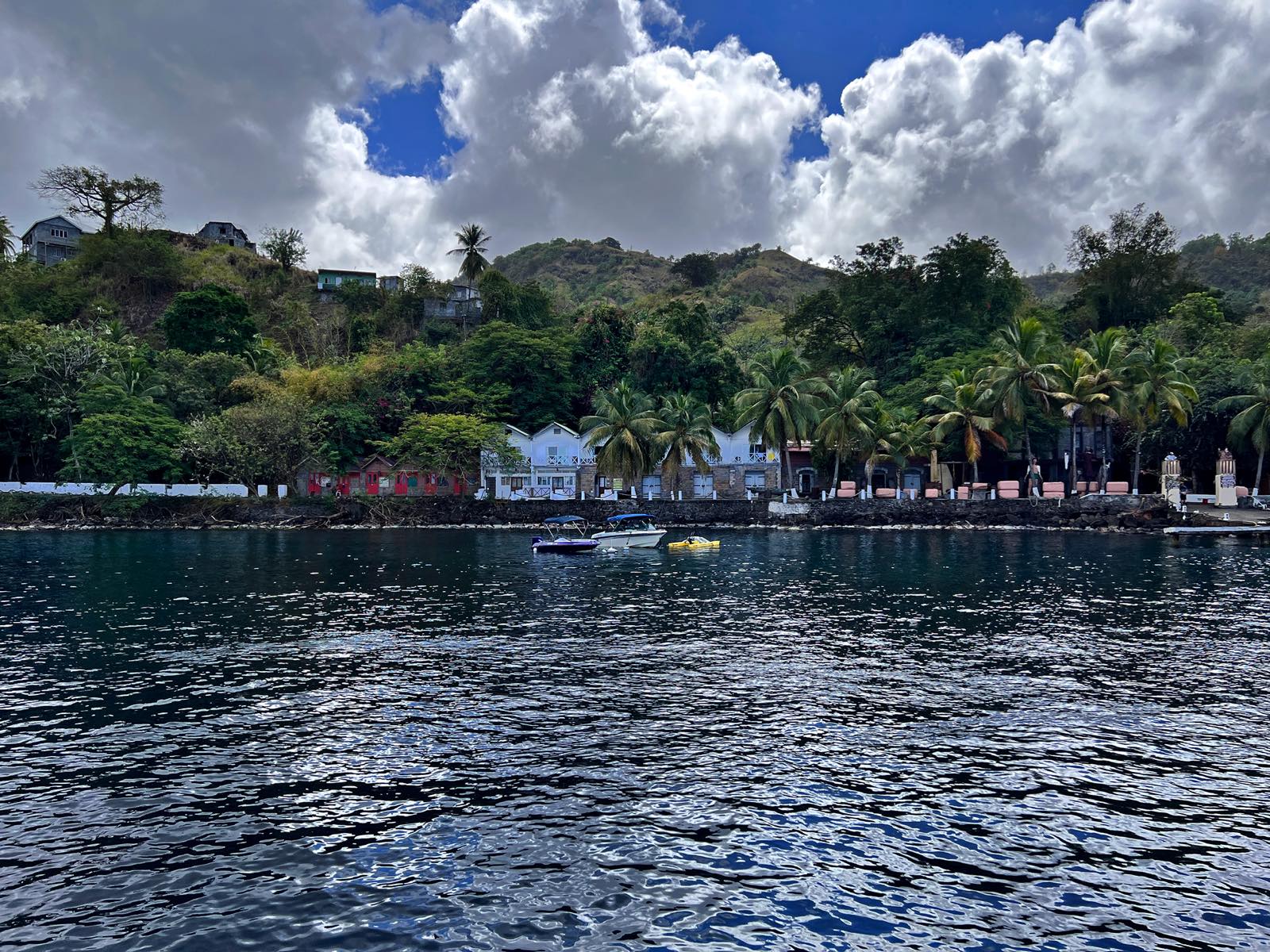
The first “Pirates of the Caribbean” movie was filmed in part right here
Words & Photos by Michael Salvarezza and Christopher P. Weaver
Following this entrance, Captain Jack Sparrow makes his way through the raucous streets of Port Royal, and the enduring story of this captivating pirate begins in earnest. But as is often the case in Hollywood, the film was not shot on location in Jamaica…rather, this iconic scene was staged in a place known as Wallilabou Bay on the island of St. Vincent. An elaborate set was built here to resemble a 17th-century bustling Port Royal, and parts of this set, along with props and memorabilia, have remained at Wallilabou Bay ever since. Indeed, St. Vincent and several of her smaller neighboring islands (known as The Grenadines) served as a major production base for that first Pirates of the Caribbean movie.
Just as the fictional Captain Jack Sparrow was inspired by tales of authentic pirates, we arrived in St. Vincent determined to explore this island’s underwater world similarly inspired by stories of robust coral reefs and intriguing macro life. And our first dive was to literally follow the footsteps of Jack Sparrow, a plunge beneath Wallilabou Bay itself at a site known as Gorilla Rock.
After a briefing that not only included helpful information about the underwater terrain, but also detailed how Gorilla Rock was actually used in that opening sequence of the movie (it was from Gorilla Rock that pirate skeletons were hanging to ward off intruders and to which Captain Jack Sparrow saluted as he entered the harbor), it was time to dive.
With visibility exceeding 80 feet, we could easily spot the bottom 50 feet below as we descended. In early March, the water temperature was a comfortable 80 degrees as we explored a vibrant rocky reef that tumbled into the depths. Schools of Blue Creole Wrasse flew by, followed by groups of Princess Parrotfish searching for the egg masses of Sergeant Majors. With healthy corals, a plethora of disparate species of sponges and a wide variety of tropical fish flitting around, the reef was alive! We bottomed out at around 75 feet, although we could have gone much deeper along the sloping reef, and then began slowly ascending along the rocks, spying Spotted Morays and elegant Christmas Tree worms along the way. St. Vincent has a reputation for delivering good macro opportunities and Gorilla Rock was an ideal introduction.
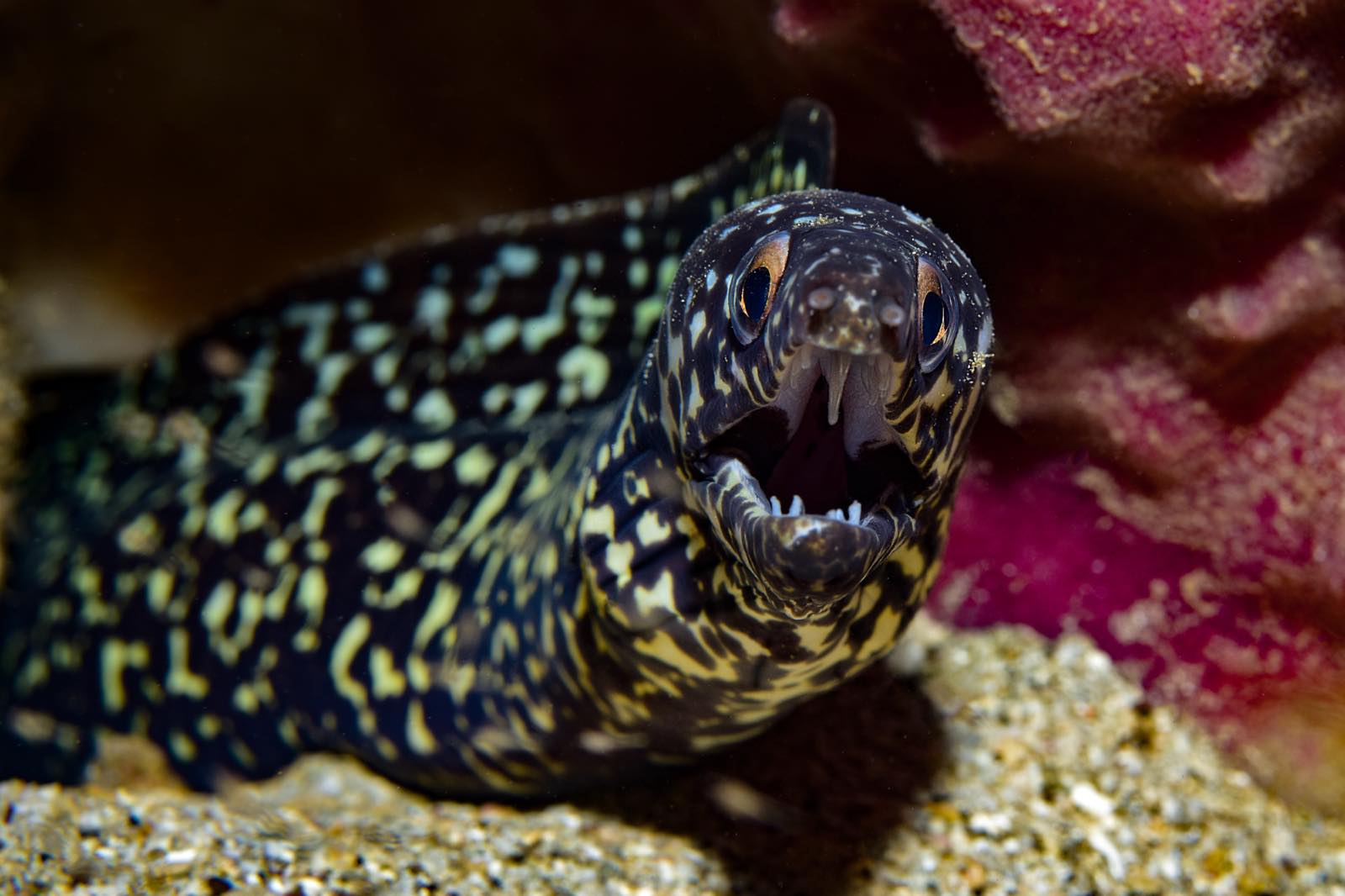
St. Vincent is home to a number of species of Moray Eels
St. Vincent and the Grenadines are a collection of 32 islands lying to the south of St. Lucia and north of Grenada. The main island of St. Vincent, home to Argyle International Airport, was our base of operation for this expedition but the Grenadine islands of Mustique, Bequia and many others all have their own style and vibe that makes the entire country worth exploring. Volcanic in origin, St. Vincent boasts dramatic mountain vistas and verdant forests fed by prevailing winds and frequent rains. The rain, known locally as “liquid sunshine”, is often gentle and short-lived. Almost as an offering of apology, the skies frequently burst into magnificent rainbows after a period of rain!
St. Vincent and the Grenadines is an independent sovereign state within the Commonwealth of Nations, having gained full independence from Britain on October 27, 1979. It operates as a parliamentary democracy and a constitutional monarchy, with King Charles III as its head of state, represented by a governor-general.
Visitors are welcomed and the residents here are proud to show them their island. Roads are winding and sometimes steep, but as you travel through the countryside, you might see spice markets, local fish markets or groups of school children returning home after a day of studies.
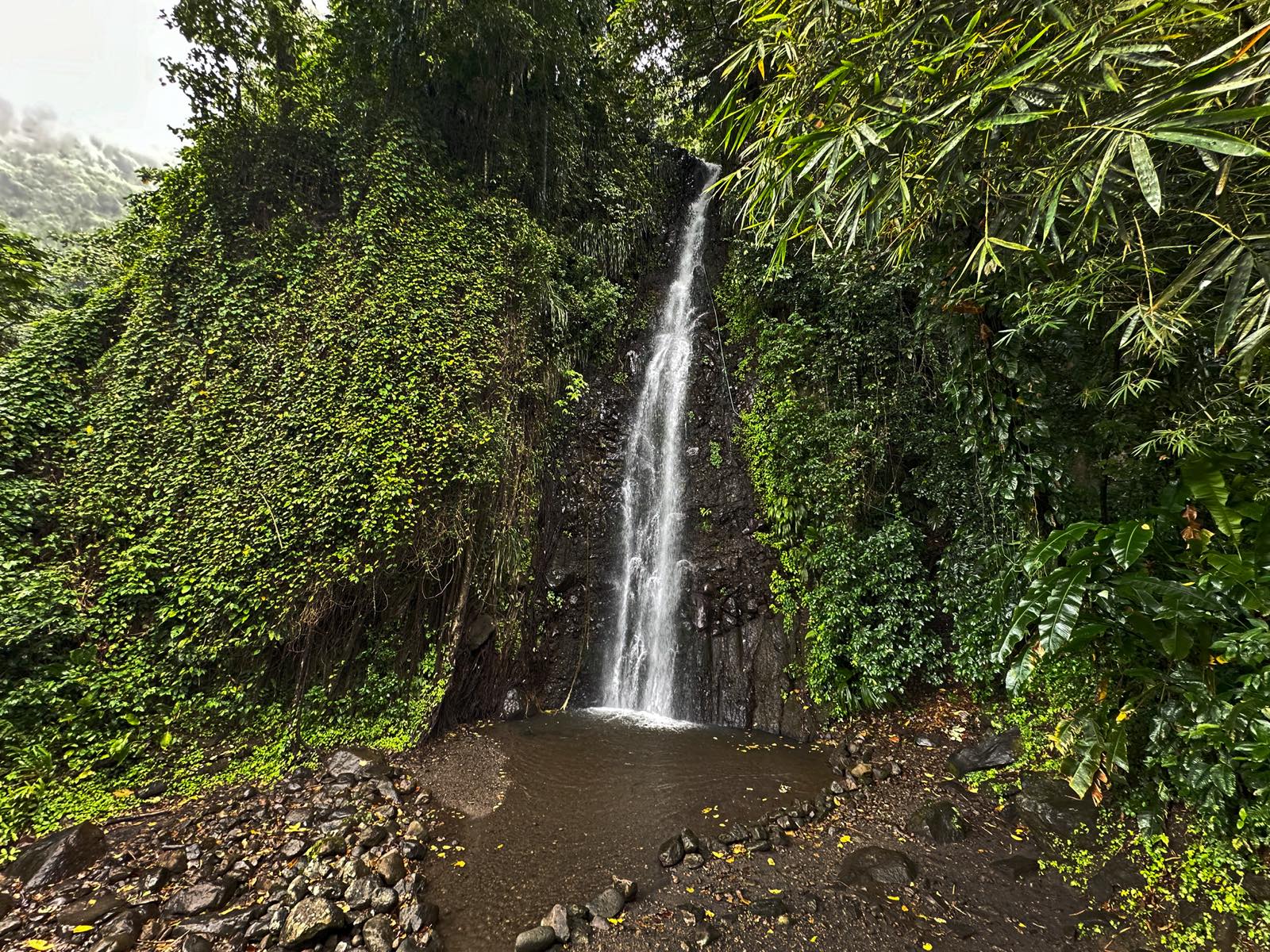
One of the three waterfalls at Dark Falls, St. Vincent
On a break from diving, visitors might consider visiting Dark Falls, a series of three waterfalls that beckon with cool, refreshing water powerfully tumbling from the cliffs above. More adventurous souls may wish to hike to the island’s active volcano, La Soufrière, which had a major explosive eruption in April of 2021, forcing widespread evacuations on the island. Others may choose to sail to the Grenadines or take up wind-surfing on the windward side of the island.
Much of the diving on St. Vincent occurs on the leeward side of the island. There are several high-quality dive operators here, including Dive St. Vincent which pioneered “critter diving” in 1978, Dive Antilles and Serenity Dive, both known for personalized service, and Sandals, which operates out of the new luxury Sandals resort in Buccament. Extended excursions to the Grenadines can be arranged through these operators as well, but you can also find dedicated dive operators on the other islands themselves.
After a surface interval spent in Wallilabou Bay quietly peering at the remnants of the Hollywood production and trying to recall the iconic scenes of Captain Jack Sparrow, it was time for our next dive.
At Cane Garden Point, we found another sloping reef on the leeward side of the island, and we used our 60mm lens to photograph more parrotfish, a menacing Lizardfish, the dazzling Flamingo Tongue Cowrie and several pairs of Spiny Lobster peeking out of their lairs.
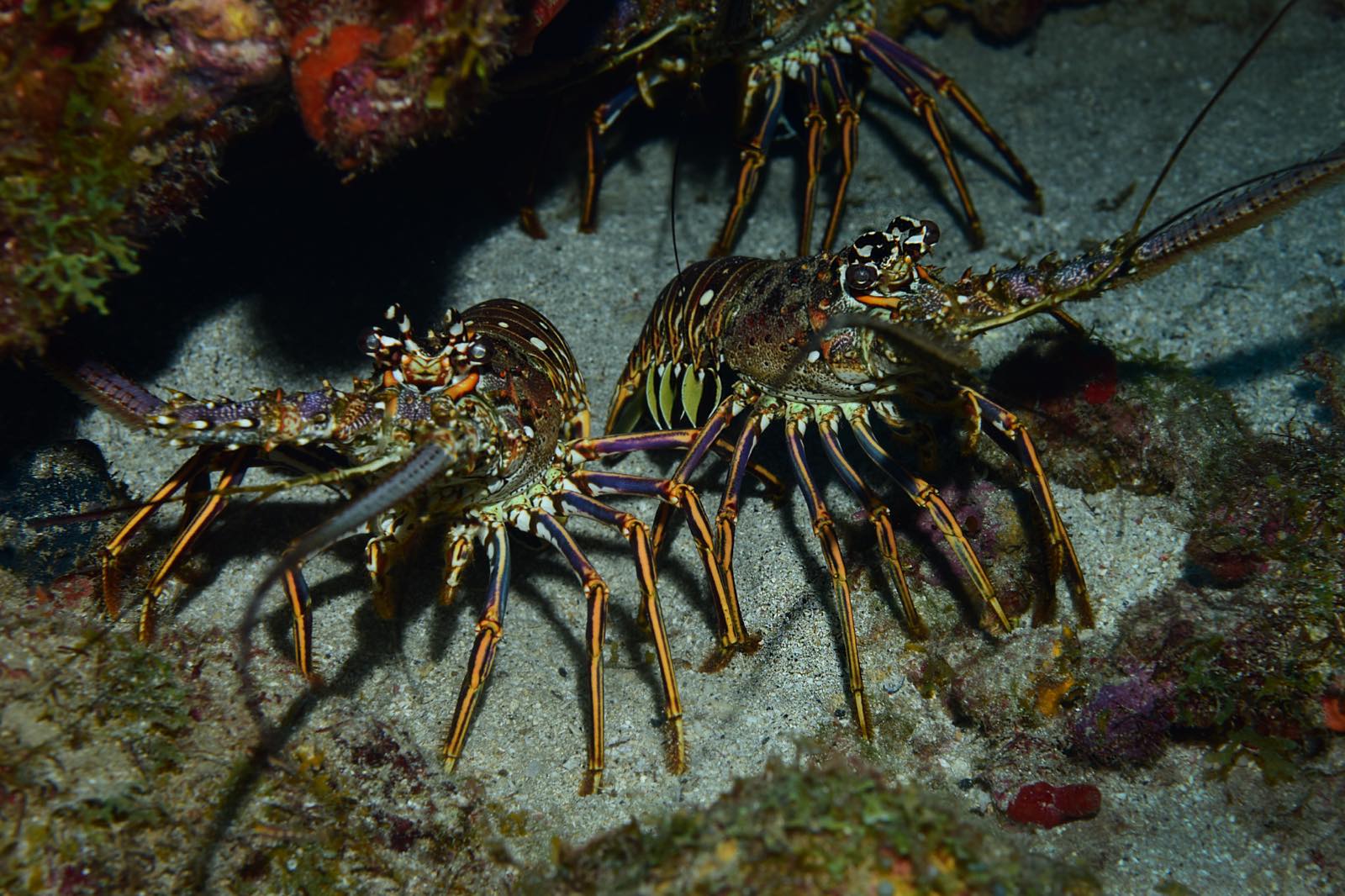
A group of Spiny Lobsters
Later in the week, we explored a number of other dive sites, each with their own cast of intriguing characters. One memorable dive is known as Bat Cave.
No, this dive did not feature Bruce Wayne, another favorite fictional character. Rather, it got its name because the dive begins with a surface swim through a fairly tight grotto that has become home to a large gathering of fruit bats. After a short surface swim, we descended through a school of Glassy Sweepers as we dropped to the sea floor at about 50 feet. From there, we found numerous Glasseye Snapper, Squirrelfish, Blue Chromis and Stoplight Parrotfish as we drifted over a thriving reef system.
The island’s mountains extend right to the shore, and the vertical terrain continues under the water. Layou Wall is an excellent dive along a rocky wall where we encountered clouds of Brown Chromis along with Damselfish seeking to punch above their weight by threatening us divers if we came too close to their eggs!
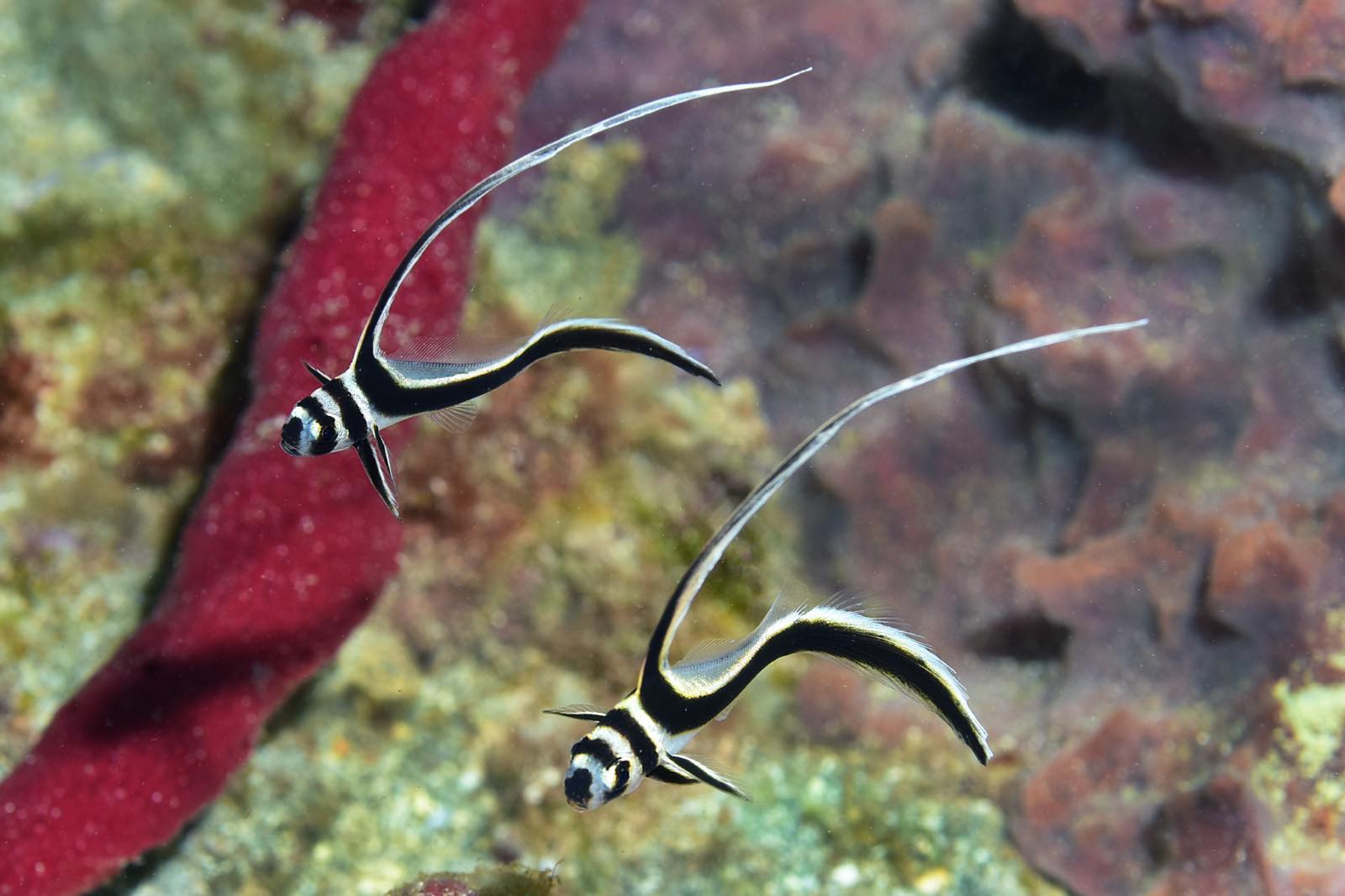
A pair of juvenile Spotted Drum fish
We also spotted several large Lionfish, the invasive species that has colonized the whole of the Caribbean. The reefs were not overrun with them, but they were there and local efforts to control them are ongoing.
Words & Photos by Michael Salvarezza and Christopher P. Weaver
Under a ledge, we came across a sleeping Nurse Shark, the largest fish we had encountered on a trip designed for macro photography and one that was indifferent to our approach.
The interestingly named dive site known as Tap and Run started along the reef where we descended to 90 feet photographing a pair of elegant juvenile Spotted Drum dancing in spellbinding synchronicity and ended in a garden of eelgrass where we searched in vain for the colorful Flying Gunards – maybe next time!
Other dive sites we explored included The Arch, Emory Point and Anchor Reef. Each had their unique features. But taken as a whole, we discovered a coral reef system thriving and healthy. We did not encounter large pelagics, sharks or turtles but the macro opportunities abound.
For divers, St. Vincent represents a glimpse at a once healthier Caribbean and what it was like in many other locations where the reefs are now somewhat degraded. Here, healthy hard corals, lush stands of sponges and tunicates, robust schools of fish and an eye-opening diversity of life serve to captivate divers.
The producers of the Pirates of the Caribbean franchise returned to St. Vincent to film two of the sequels: Pirates of the Caribbean: Dead Man’s Chest in 2006 and Pirates of the Caribbean: At World’s End in 2007. The natural beauty and photogenic landscapes of the islands exude a pirate ambiance perfect for their movies.
St. Vincent kept calling them back, as it does us. There is much to explore here, and we will need to create our own sequels to this very satisfying adventure.
Words & Photos by Michael Salvarezza and Christopher P. Weaver