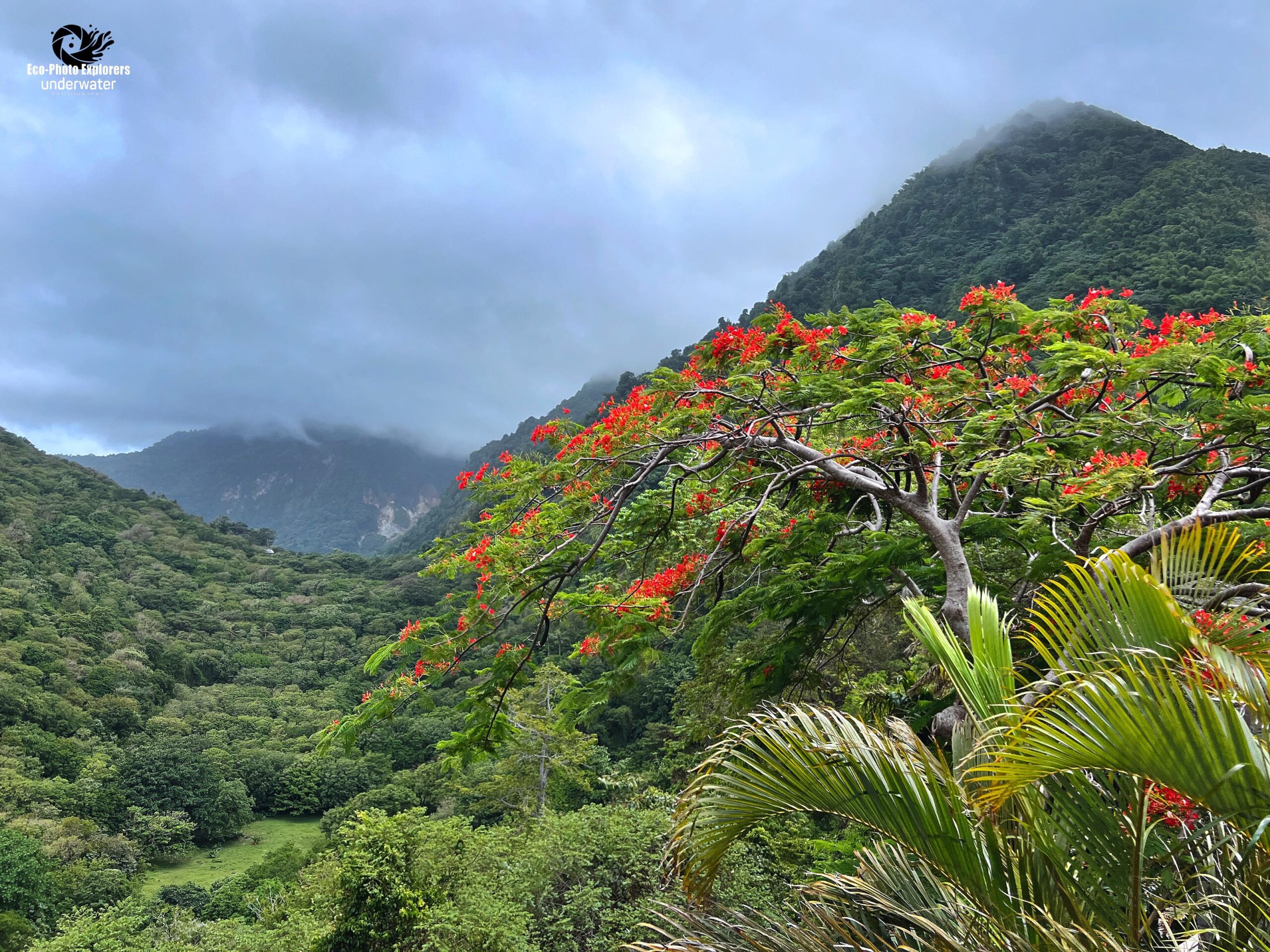
The first glint of sunlight peeked over the mountain ridge and began to bathe the dark green rain forest with early morning tropical warmth. An evening symphony of tree frogs and crickets began to fade into a daytime chorus of bird calls, cicadas and the fluttering of hummingbird wings. It was daybreak on Dominica, the Caribbean’s nature island.
In the distance, the town of Soufriere began to shake the nighttime slumber and come to life. Mixed into the early morning activities of the small village came the familiar sound of clanging tanks and short bursts of compressed air. These are clarion calls for scuba divers and as the tanks were being loaded onto carts and moved to the dive boats, a small contingent of underwater explorers wiped the sleep from their eyes and began making their way to the dock.
Words & Photos by Michael Salvarezza and Christopher P. Weaver
It was time to begin another day’s adventure exploring the counterpart of Dominica’s lush rain forests and vibrant ecosystems– it’s underwater world of corals and pinnacles!
Our indoctrination to Dominica’s vibrant marine world came loaded with superlatives as we explored a dive site just offshore from Scott’s Head known as Scott’s Head Dropoff. Located on Dominica’s west coast within the Soufriere Scotts Head Marine Reserve, the dive sites here feature a stunning underwater terrain and a rich variety of marine life. Scott’s Head Peninsula marks the convergence of the Caribbean Sea and the Atlantic Ocean, and as a result the underwater ecosystem here is quite diverse. Originally a submerged volcanic crater, the pinnacles here now support rich reefs of hard corals, stands of very large barrel sponges and a plethora of reef fish mixed with pelagic ocean-going species.
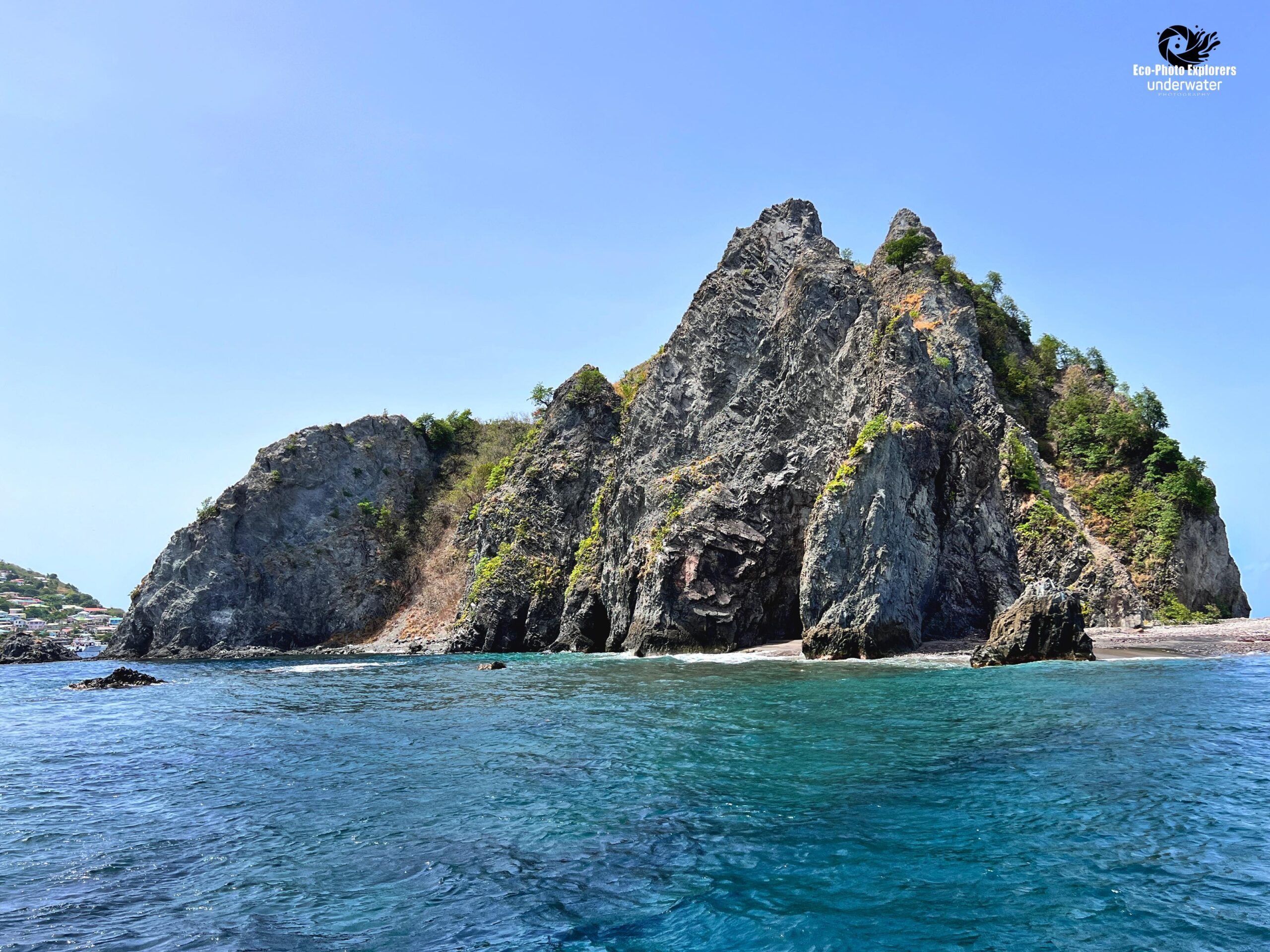
Scotts Head, home to several world class dive sites
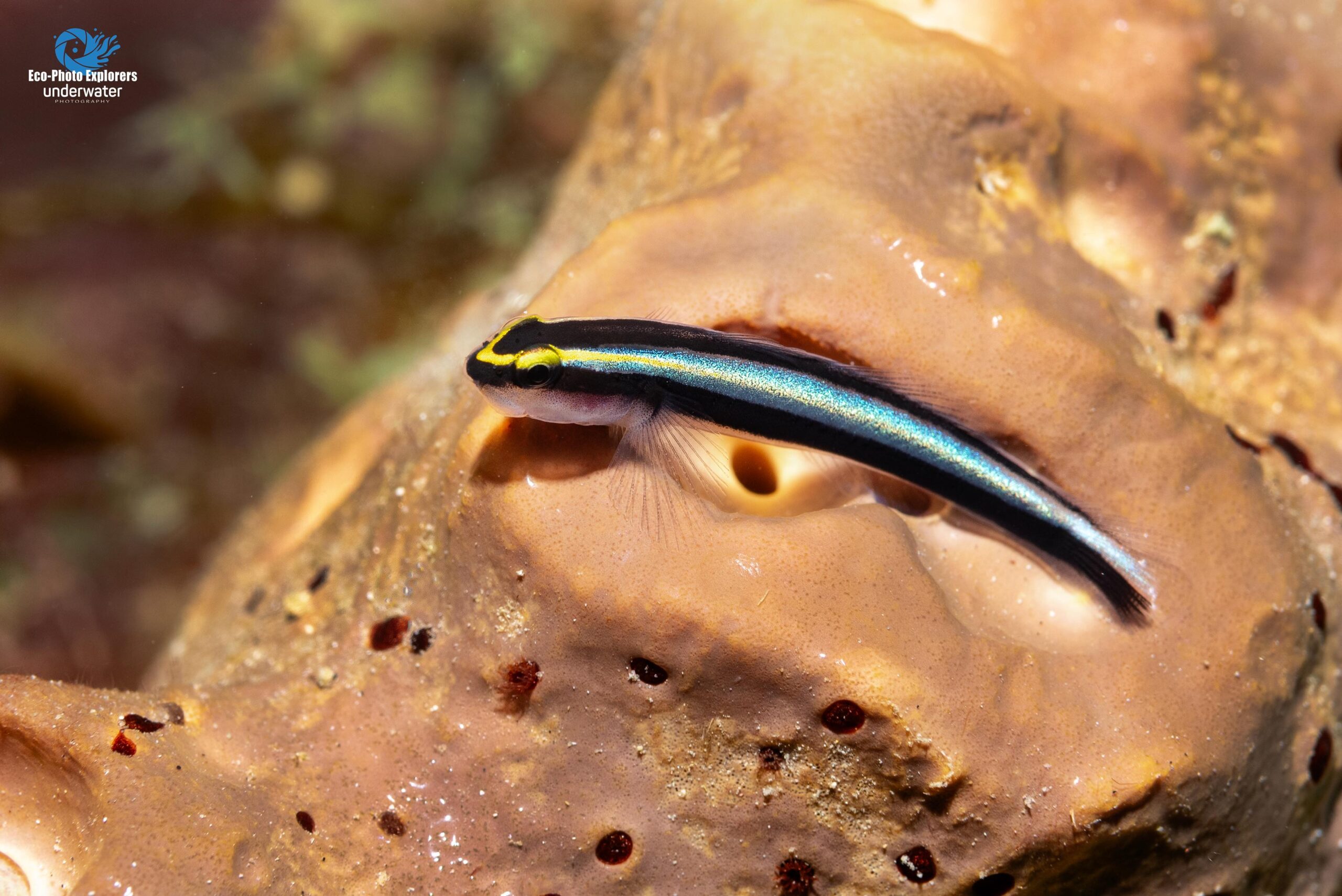
We were shooting macro on this day, and we soon were mesmerized with the familiar antics of the Sergeant Majors who were vigorously defending their patches of purple egg masses and would dart out at any perceived threat, including divers, in an effort to drive away the potential threat. Similarly, an aggressive Three-Spot Damselfish startled us when it warned us off its nesting area with a punch to the hand…all while we were distracted photographing a cleaning goby on a nearby Stovepipe Sponge.
We dropped to 90 feet along a wall of tumbling boulders and marveled at the dramatic underwater topography. Pinnacles rising from the deep, sharp drop-offs and walls, and stunning overhangs sheltering hordes of marine fish made our first dive in Dominica a memorable one.
Our dive operator was Nature Island Dive, and their procedure is to return to shore between dives so divers can relax, grab a bite to eat or a warm coffee at the café alongside the shop and take in some sun while they wait out their surface interval. This gave us a chance to peek into the Daniel Langlois Coral Rescue Center, located directly in front of the dive shop. We chatted with one of their summer interns and learned about their efforts to rehabilitate vulnerable corals in the hopes of replanting them in areas less sensitive to stress. Climate change is driving warmer temperatures in the oceans and coupled with devastation from diseases like Stony Coral Tissue Loss Disease, hard corals are under extreme stress throughout the world’s tropical oceans. Efforts like the ones in Dominica are on the front lines of helping preserve these reefs. The Coral Rescue Center in Dominica goes further than just corals; sea urchins, necessary to the health of corals, are also facing population crashes and the center is attempting to repopulate the reefs with these marine creatures as well.
Nature Island Dive works closely with the Coral Rescue Center. The owner, Simon, will often come out on the dive boat, sometimes with a team of volunteers, with various missions associated with coral preservation. Some days it may be harvesting threatened and vulnerable corals to be replanted elsewhere. Other days, surveys may be the objective, or it may be photogrammetry sessions to document specific sections of reef, or it may even be a Lionfish hunting dive to remove the invasive fish from the reefs.
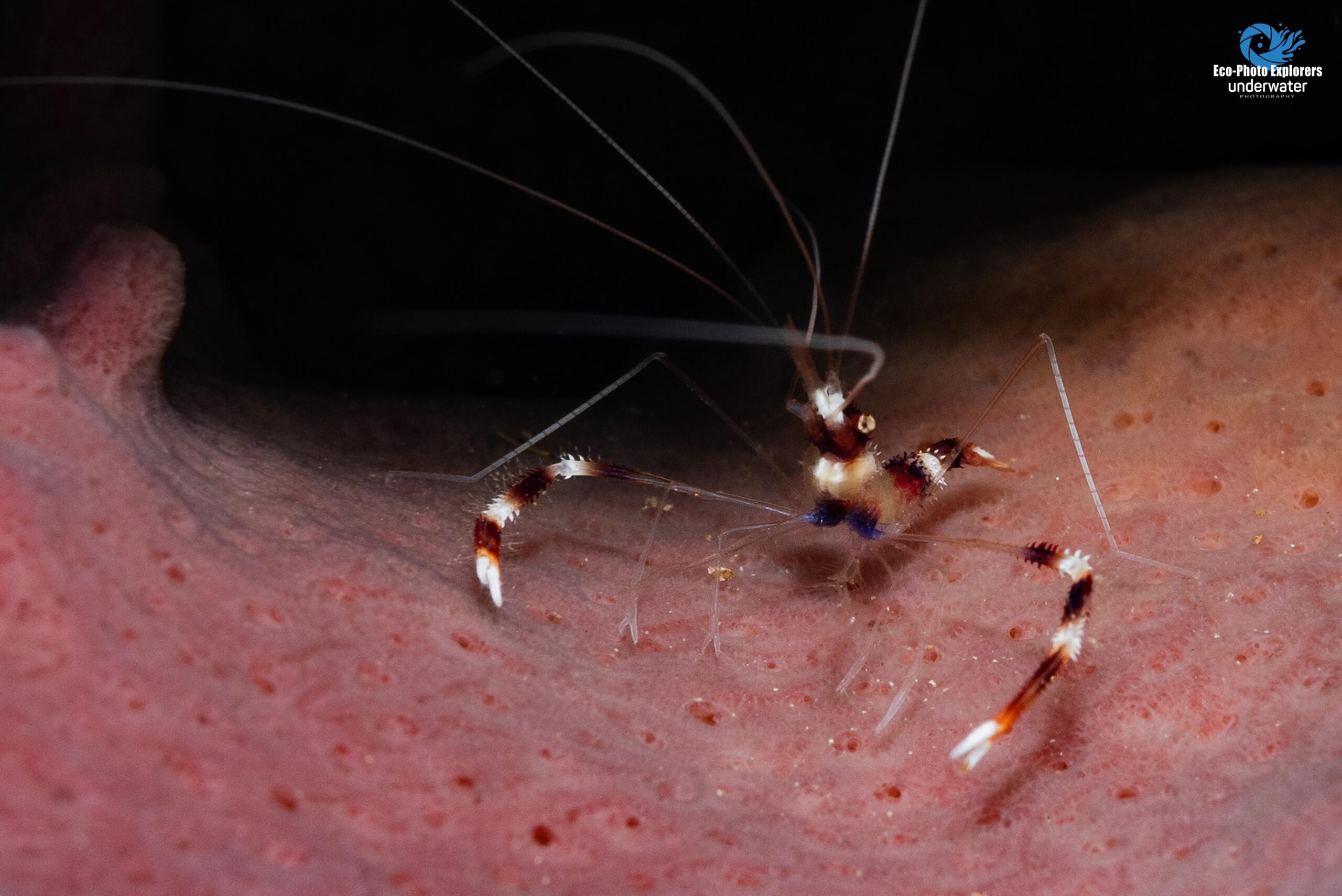
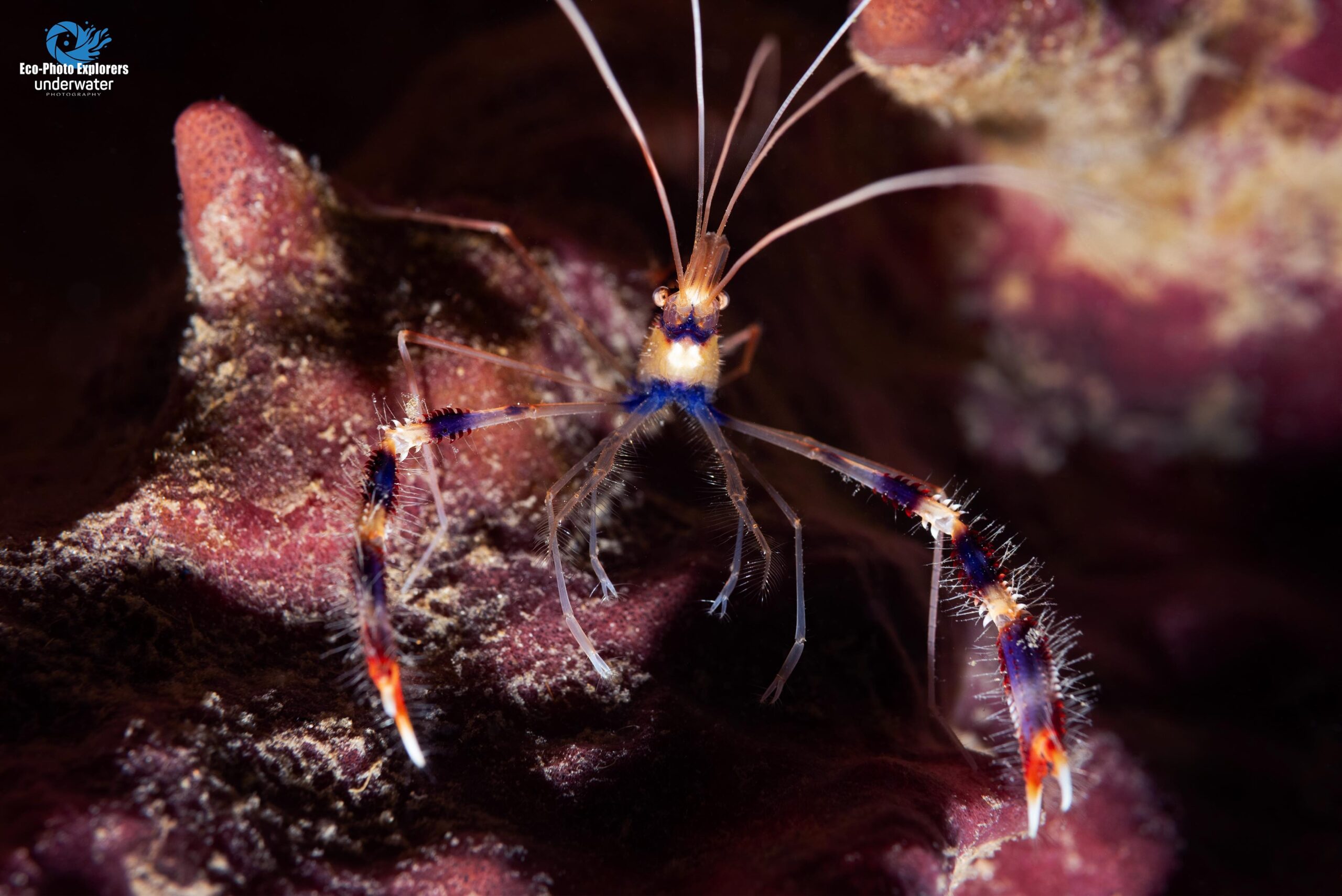
A Banded Coral Shrimp waits for a host looking for its cleaning services
Our next dive was at a site known as Coral Gardens. Here, a tongue and groove coral reef supports loads of smaller reef fish. We spent time photographing Blue Chromis, Butterflyfish and a grove of Garden Eels. Throughout most of our dives, clouds of Brown Chromis would swarm over the coral outcroppings, reminding us of Anthias in the IndoPacific.
Most of the dives here begin and end in shallow water. In fact, the dive leaders utilize the reef structure to build in a 3-minute safety stop while still on the reef, giving us photographers one last chance to create some images while exploring in water shallow enough to count as a safety stop.
Our second day of diving took us to Point Guignard and Witch’s Point, two very dramatic dives that expose divers to the dramatic drop-offs that characterize Dominica’s southern region. Here, captivating pinnacles and near vertical walls extend to very deep waters just a few feet from the shoreline. At Point Guignard, we encountered a Loggerhead turtle that decided he was part of our dive team. Swimming along the wall, we were transfixed by this turtle as he cruised just below the divers for quite a distance, seeming to enjoy the company. Perhaps he thought he was leading the tour!
At Witch’s Point, the deep blue of the open water revealed a school of Barracuda while a King Mackerel darted in over the reef looking for a quick meal. The mixture of deeper water and shallower reefs gives divers the opportunity to see a wide range of creatures on one dive.
The waters near Soufriere are deep; 300 feet of depth is the average, with some offshore sites dropping to below 1200 feet. These sheltered but deep waters make it an ideal location for free diving. Indeed, there are several dedicated freediving platforms permanently installed just off the beach where professional free divers come to train.
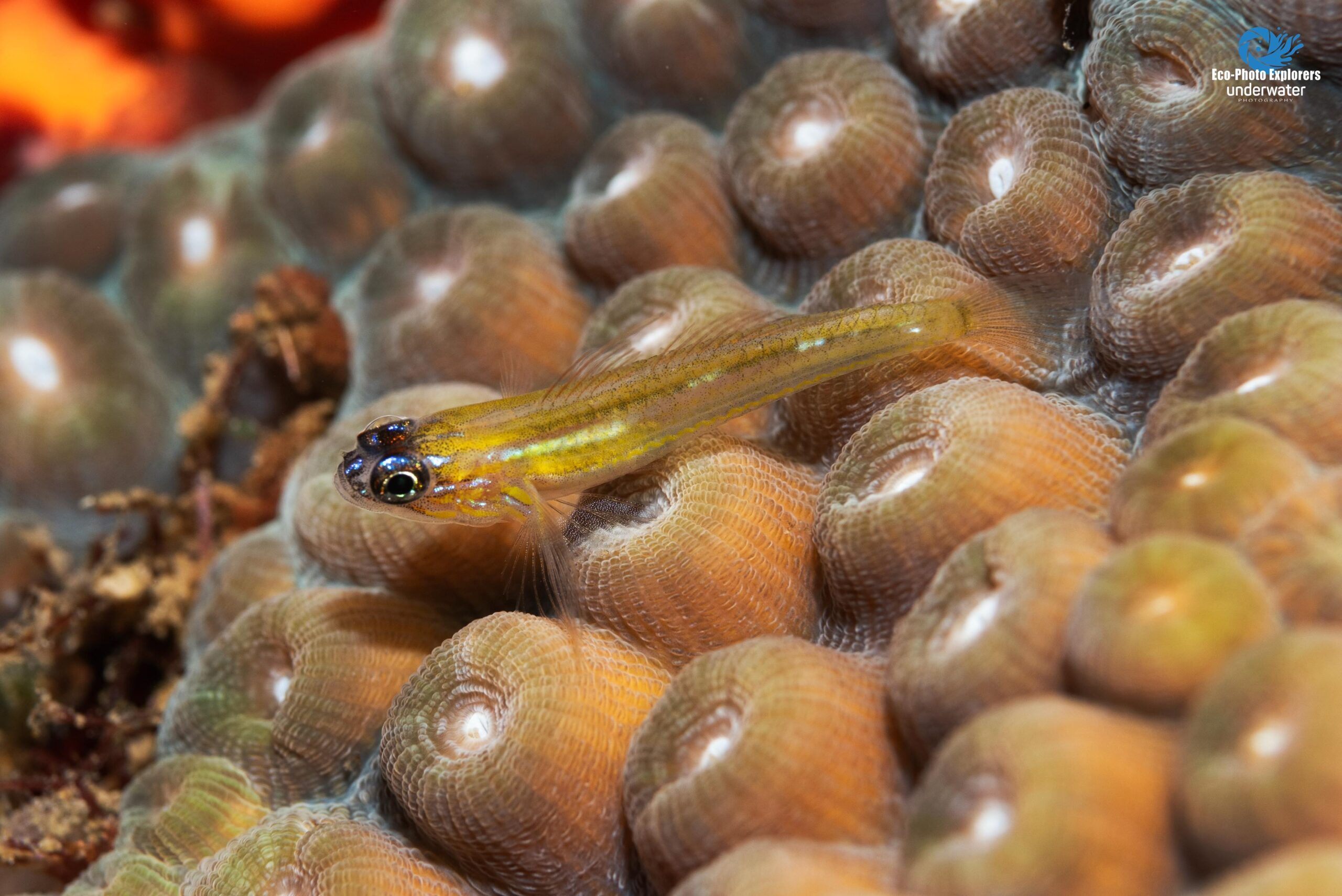
Darting around on the surface of hard corals are Peppermint Gobies
In Dominica, there are a number of quality dive operations and plenty of options for accommodations. Divers who wish to blend a bit of luxury with a retreat style eco-resort can opt to stay at the Coulibri Ridge Resort, located a short drive from Nature Island Dive in Soufriere. Coulibri Ridge, built on a mountain ridge of the same name in the hilltops overlooking Soufriere, provides luxury accommodations while ensuring a minimal ecological footprint. With only 14 spacious air-conditioned suites, each with large terraces and ocean views, visitors can be assured of a quiet, serene escape in a resort that is completely off the grid. The property relies solely on solar and wind power, collects rainwater and is built entirely on reclaimed wood and other materials to minimize its impact on the environment.
Coulibri Ridge was the brainchild of Daniel Langlois and Dominique Marchand, Canadians with a passion for developing a fully sustainable luxury Eco-resort. Langois and Marchand did not live long enough to see their dream realized. While the resort was under construction in 2023, they were murdered on Dominica. Their charred bodies were found in a burned-out car. Two American nationals, Jonathan Scott Lehrer and Robert Thomas Snyder Jr., were charged with the murders. In April of 2026, the suspects pleaded not guilty in the High Court of Dominica, with a jury trial commencing in June of 2026. The murders are believed to have stemmed from a protracted, years-long legal dispute over access to a public road that connected their properties. Prior to the killings, Langlois and Marchand were building Coulibri Ridge, while Lehrer ran the neighboring Bois Cotlette cocoa estate.
The completion of the resort was accomplished by the estate of Langlois and Marchand, which continues to own and operate it today.
Our third day of diving took us to our favorite site in this region, Dangelben’s Pinnacle. Here, we entered almost within reach of the rock wall of a dramatic cliff that overlooks the sea and quickly descended to 90 feet along the sides of a breathtaking set of pinnacles that dropped into much deeper water below. Rounding the first corner, we came across a beautiful “pregnant” male Lined Seahorse tucked among some sponges along the wall. After that encounter, we drifted awhile until our eyes spotted a slight bit of movement on a whip coral frond. Upon closer examination, we spotted a pair of Whip Coral Shrimp clinging to the wiry coral branch. Photographing Whip Coral Shrimp is an exercise in patience; they sense when they are being watched and smoothly move to the opposing side of the coral frond just as you press the shutter release!
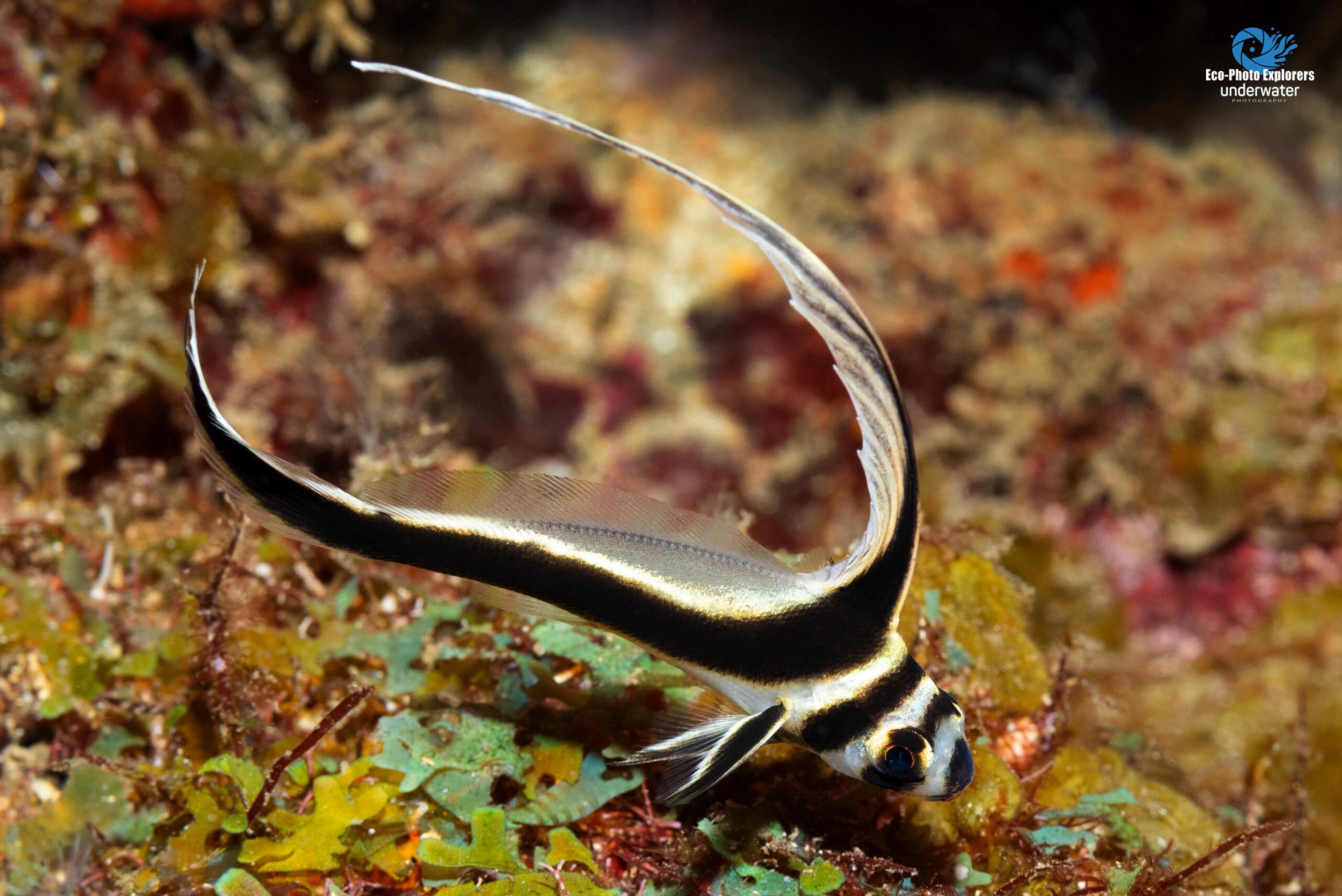
A juvenile Spotted Drum fish
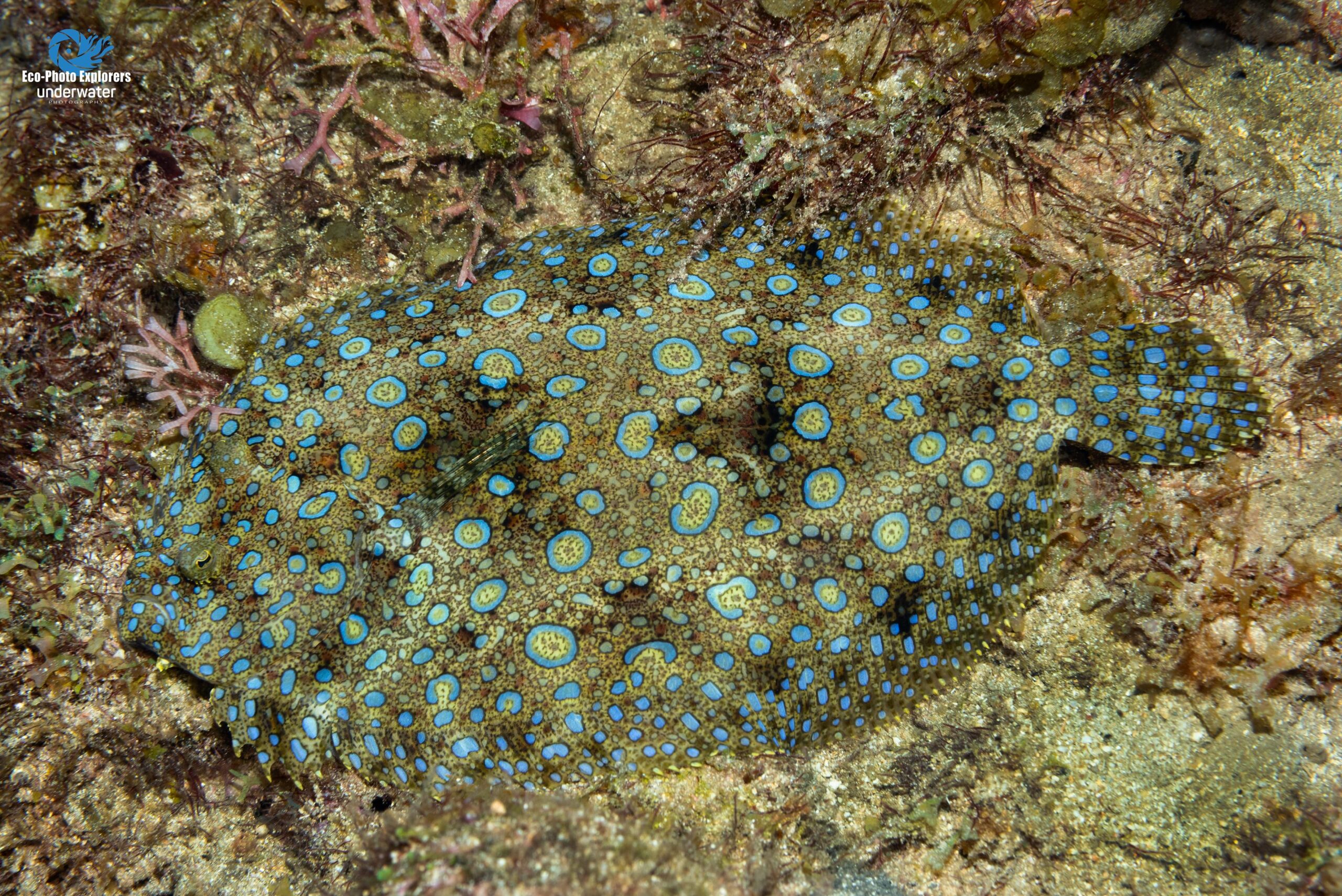
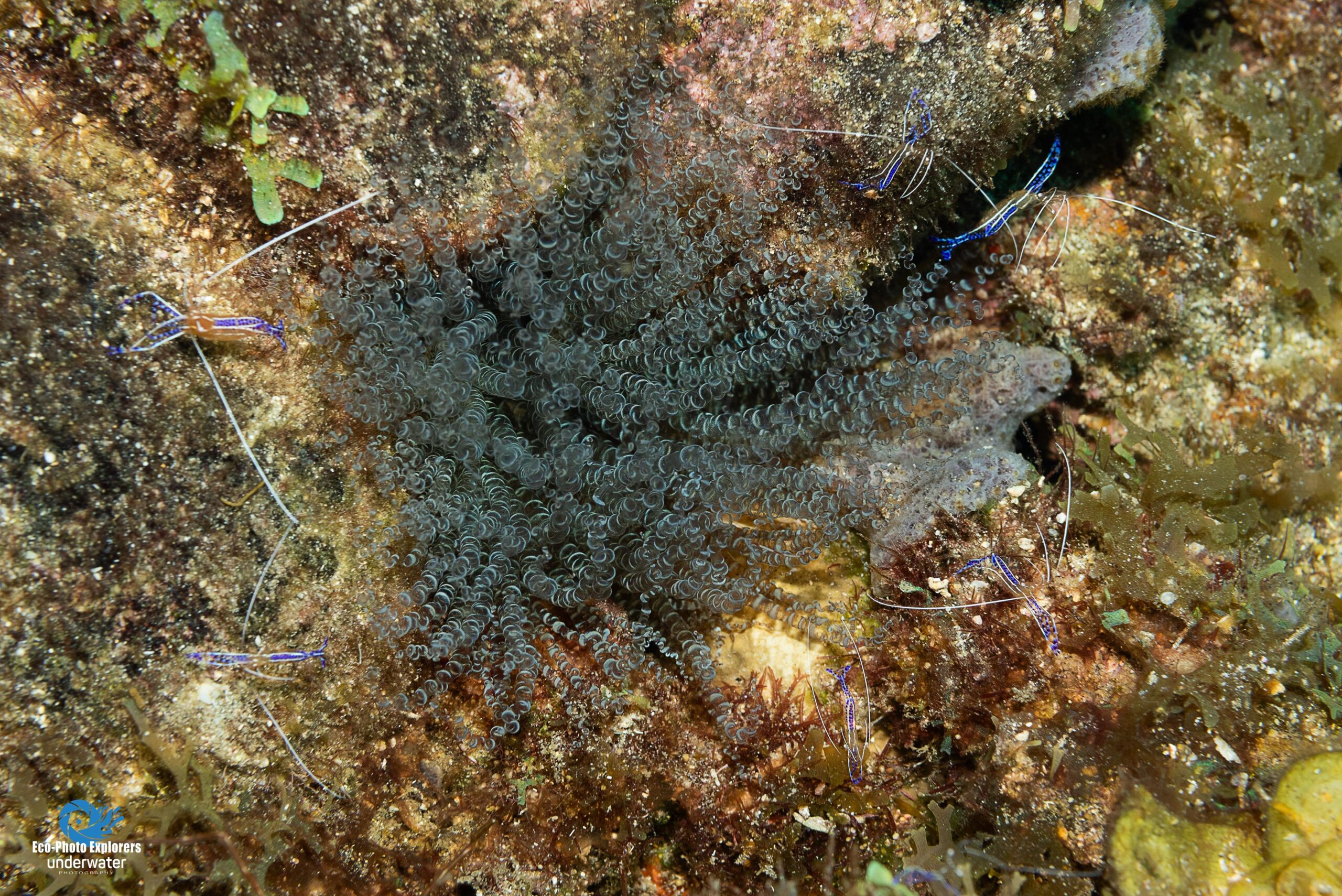
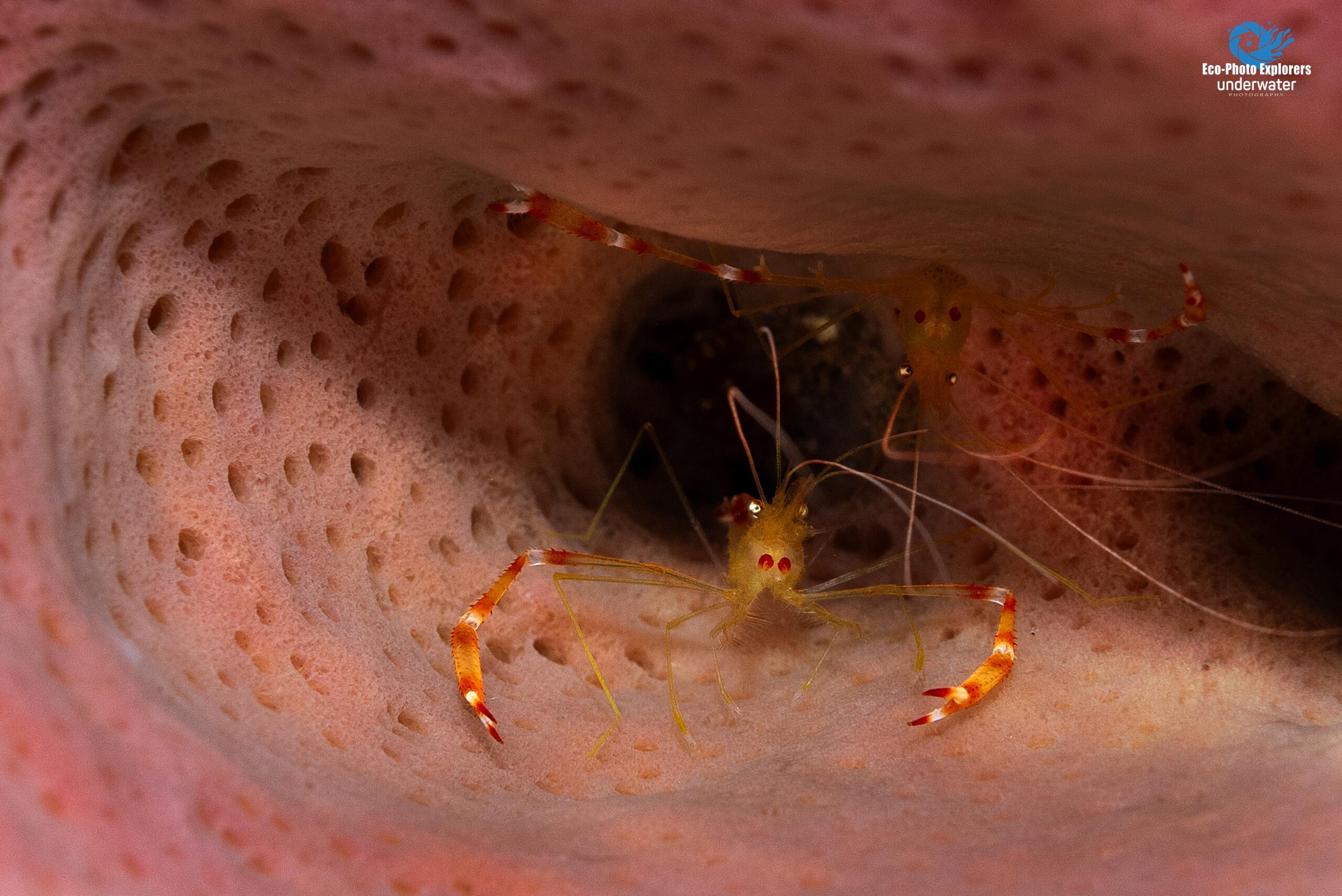
At Soufriere Pinnacle, just a short distance away from Dangelben’s Pinnacle, we spent more time looking for colorful reef creatures along the dramatic walls and drop-offs of the site. Here, we came across a group of six Pederson’s Shrimp encircling a Corkscrew Anemone. To us, this resembled six people sitting around a campfire! On this site, we also spotted a Golden Coral Shrimp, several Stonefish, a blue spotted Peacock Flounder and more Banded Coral Shrimp than we’ve ever seen in any Caribbean location. Although the reefs are healthy and the underwater terrain jaw-dropping, macro photography in Dominica is often the best choice for photographers.
Dominica is an island dominated by rainforests that blanket the mountains and gorges of this volcanic island. Rainfall averages between 70-79 inches over the year along the coast but peaks at over 390 inches annually in the lush interior. It has been described as the island of 365 rivers, one for each day of the year. We decided to trek to Trafalgar Falls for a glimpse at the power of the rain driven waterfalls. Along the way, we stopped at Titou Gorge, where a short swim in cold mountain water running through a narrow crevice in the rocks leads to another powerful waterfall. This is one way to experience Dominica’s natural beauty while waiting for the next day of diving!
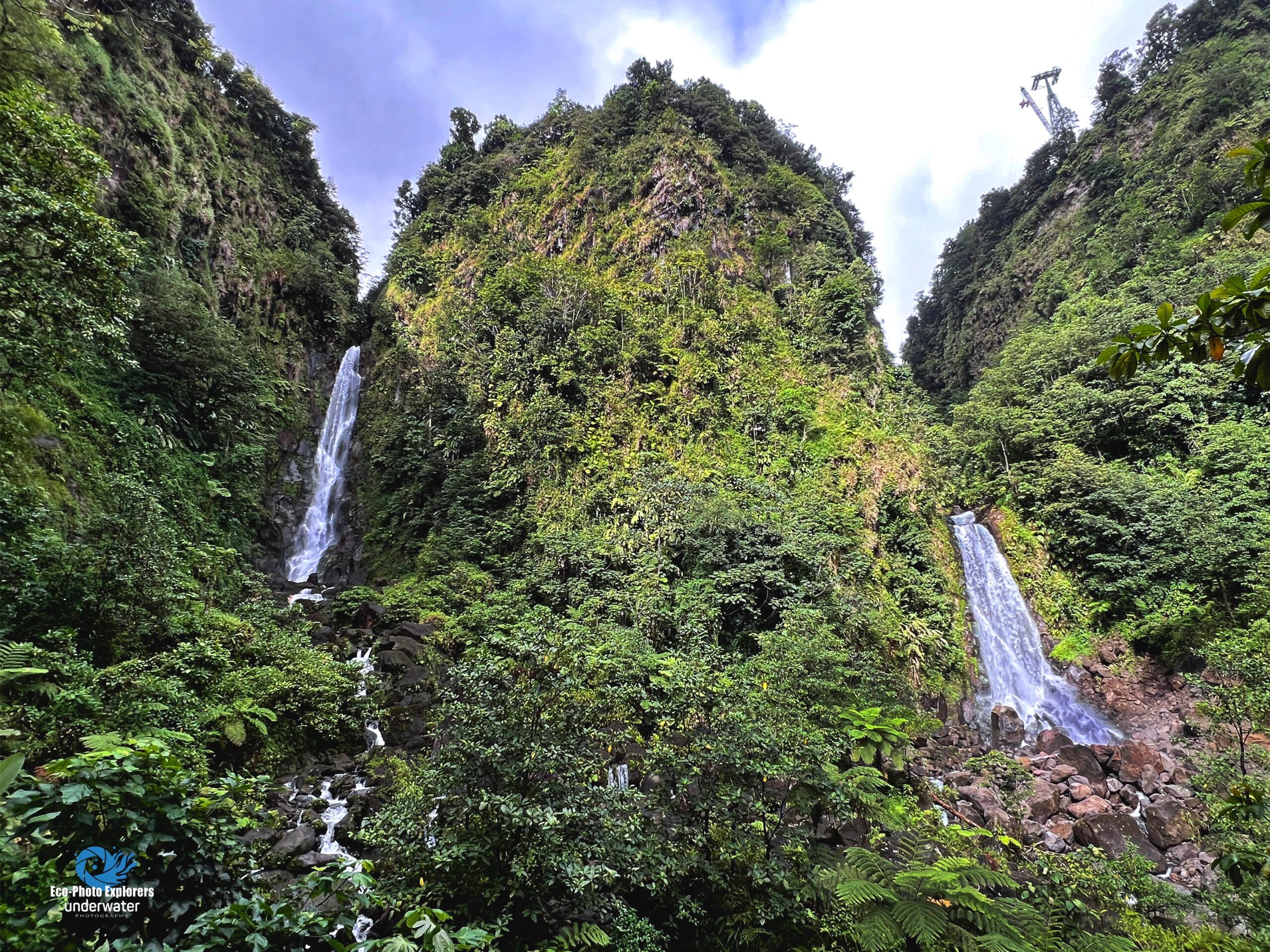
Trafalgar Falls in Dominica
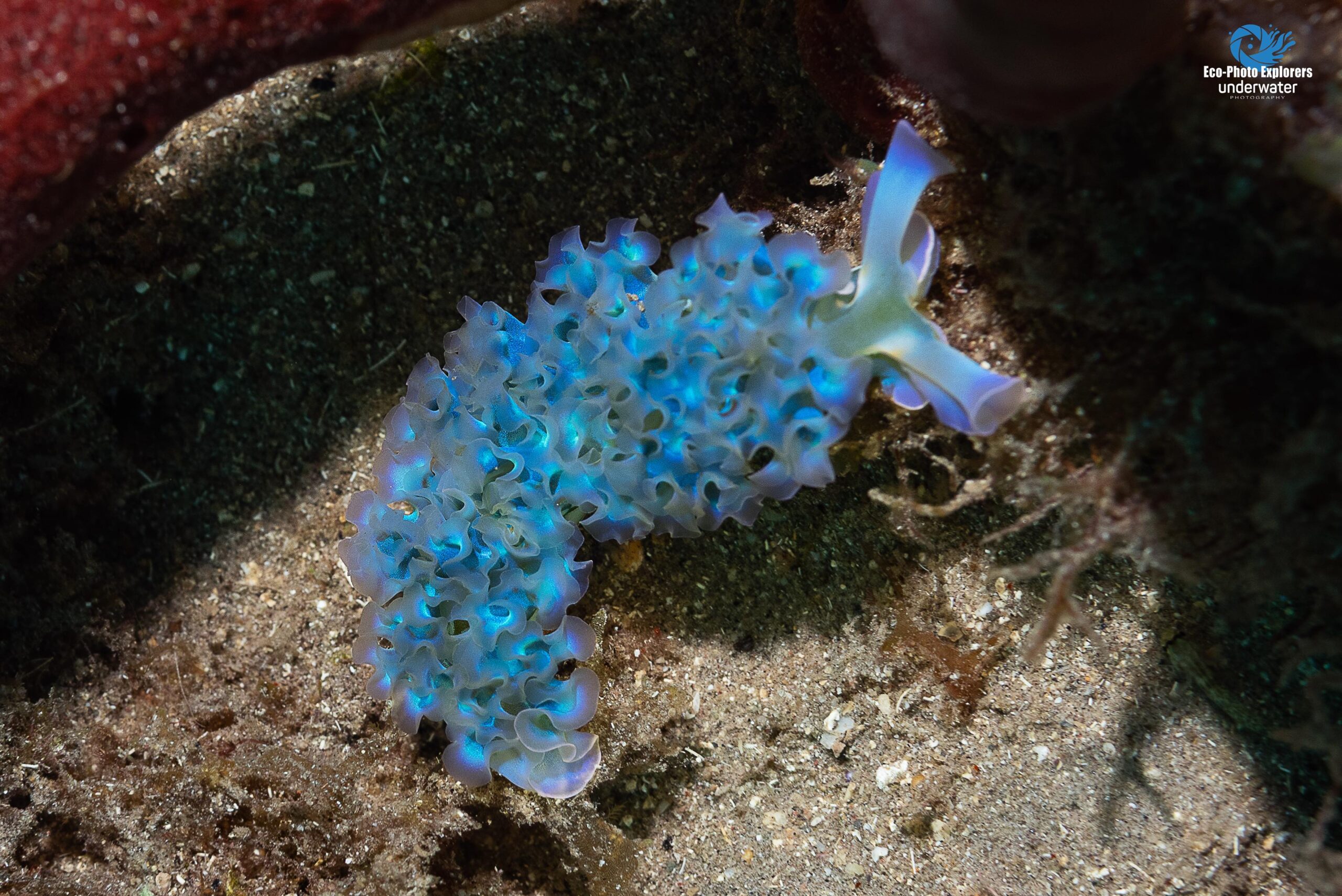
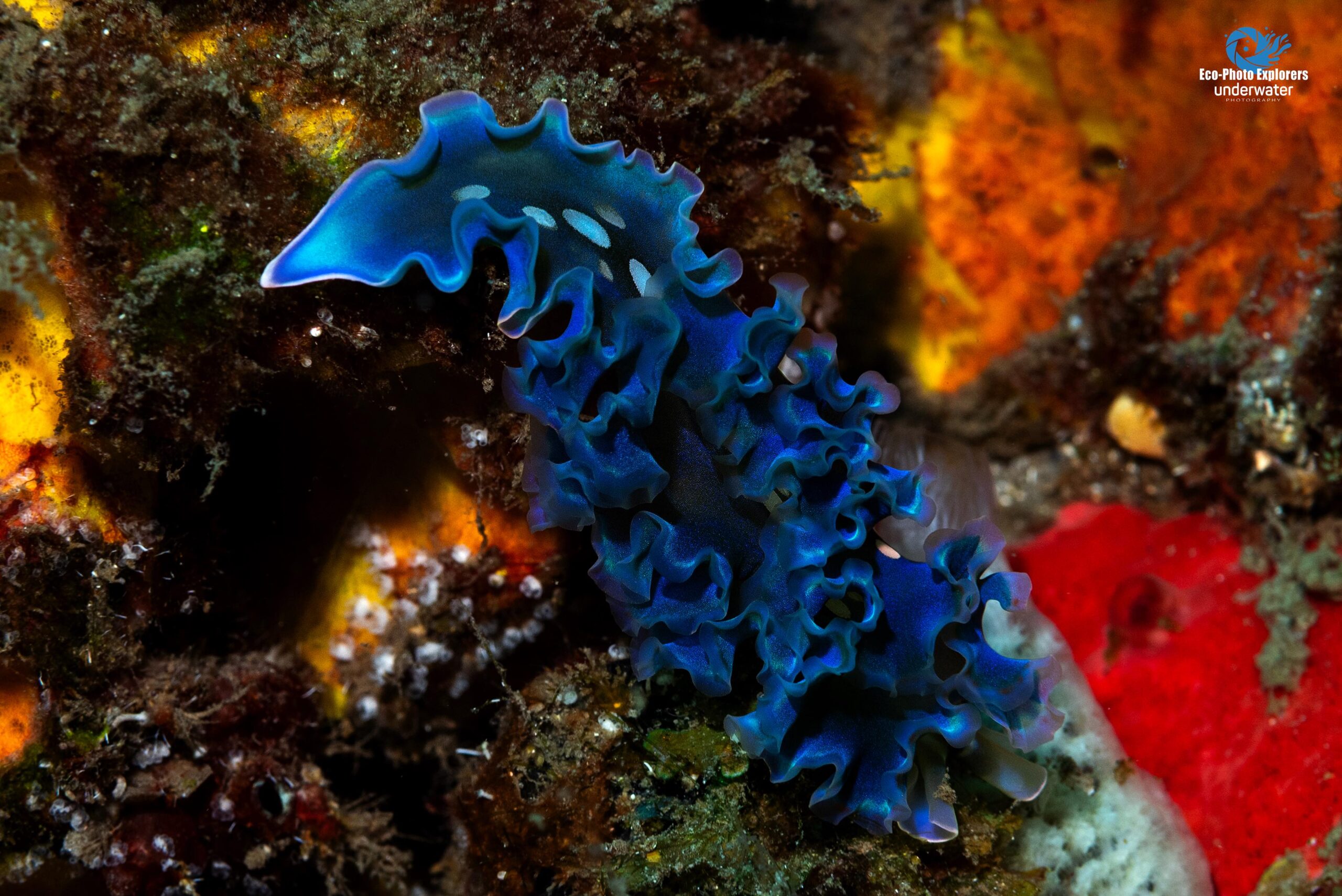
Our next few days of diving brought more colorful gems to our camera lenses: Squat Anemone Shrimp carefully hidden in the tentacles of their host anemone, juvenile Yellowtail Damselfish with their bright blue spots and juvenile Dusky Damselfish with their blaze of orange on their backs. We hovered mesmerized by the repetitive movements of the elegant juvenile Spotted Drum Fish and laughed at the histrionics of the Yellow Cleaner Wrasse as they advertised for their services. On a dive at a site known as L’Abym, we came across a blue colored Lettuce Sea Slug. Normally colored green, the blue variety is only seen occasionally and we were thrilled!
Besides the reefs, pinnacles and walls, visitors to Dominica have the opportunity to experience another of nature’s miracles in the waters of Dominica. A resident pod of Sperm Whales is present year-round in this area and whale watching tours depart from several towns to give visitors a glimpse of these animals. To be in the water with these magnificent creatures requires a government issued permit; contact the dive shop at Fort Young to inquire about this.
Dominica is referred to as the nature island. Its commitment to the environment is evident. Approximately 20% of Dominica’s total land area is preserved and protected within its national park system and other nature reserves. When combined with broader forest reserves, up to 25% of the country’s land is legally protected, leaving about two-thirds of the island covered in lush, untouched rainforest. Resorts like Coulibri Ridge honor that commitment with their approach to intensive sustainability and the efforts of the Coral Rescue Center further underscore a focus on preserving the beauty of this island. Visitors to Dominica marvel at the untouched nature in the rainforests of the mountains. Divers know a secret however: that Dominica’s natural beauty extends beneath the surface of the water! Spending time diving on these reefs only whetted our appetite for more. Exploring Dominica will take many more dives and many more visits. We’ll be back.
Words & Photos by Michael Salvarezza and Christopher P. Weaver
-
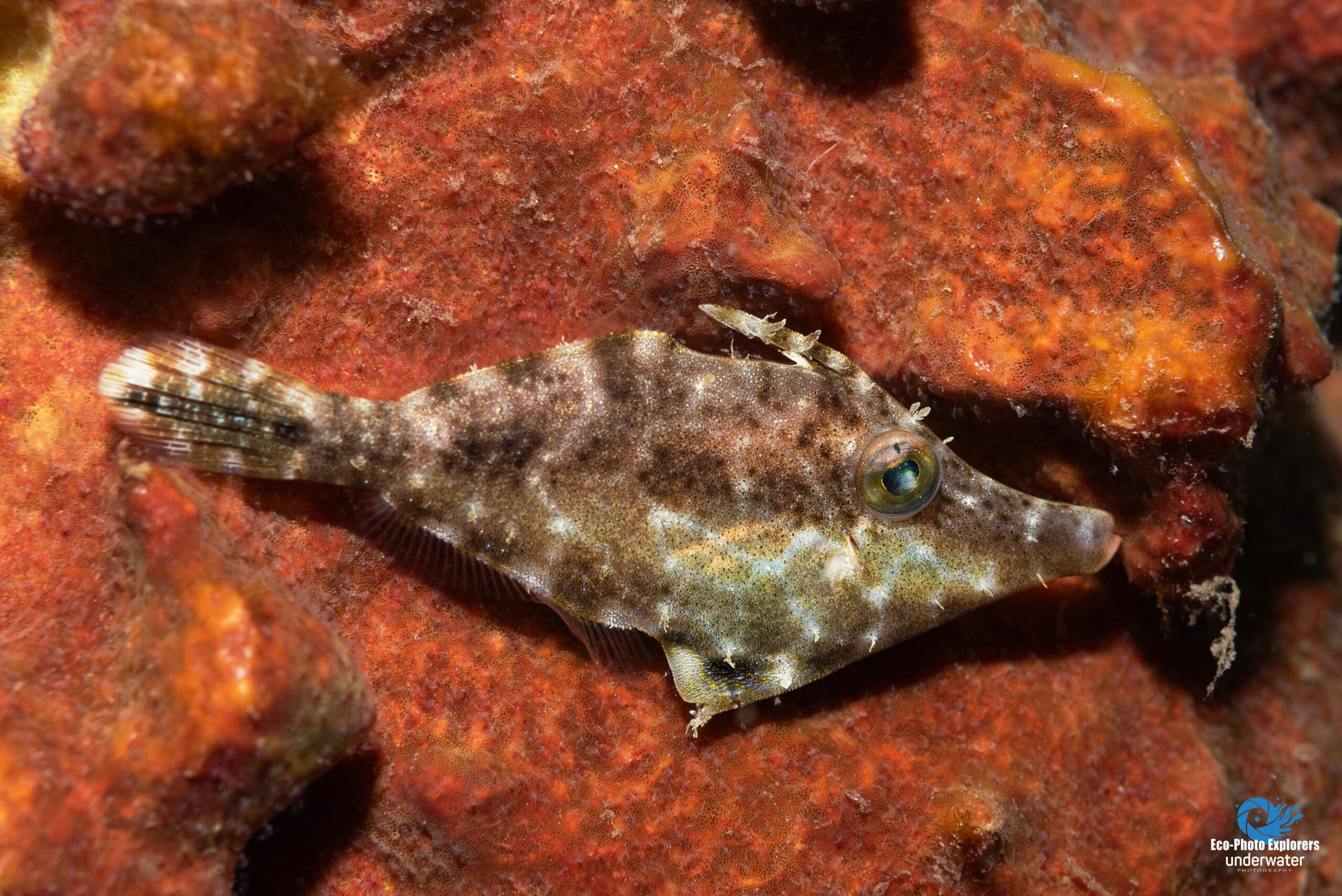
- A tiny Slender Filefish camouflaged against an orange sponge background.
-
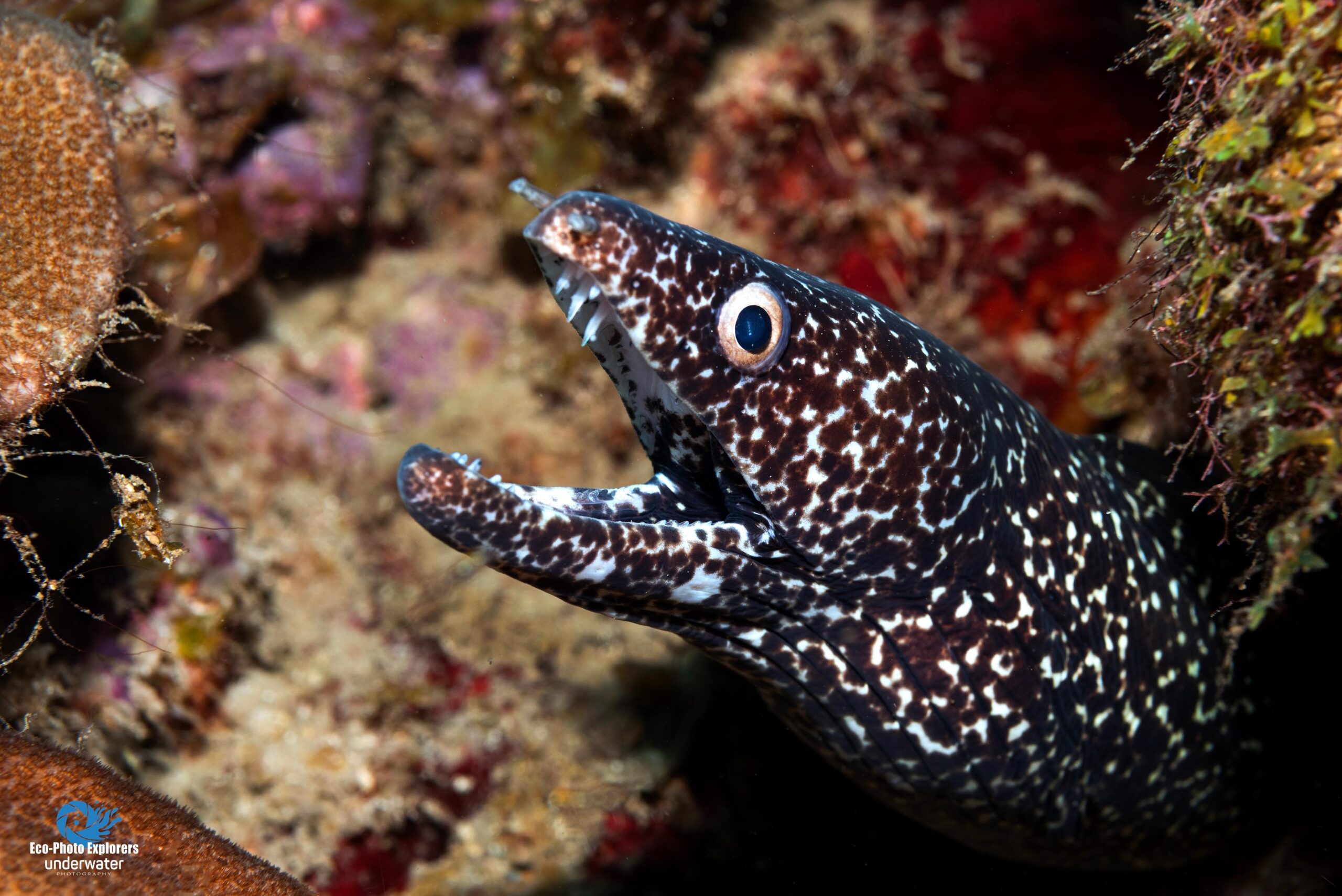
- The fearsome look of a harmless Spotted Moray Eel
-
- Despite the blue markings, the Peacock Flounder can be hard to spot
-
- A group of Pederson’s Shrimp surround a Corkscrew Anemone
-
- Darting around on the surface of hard corals are Peppermint Gobies
-
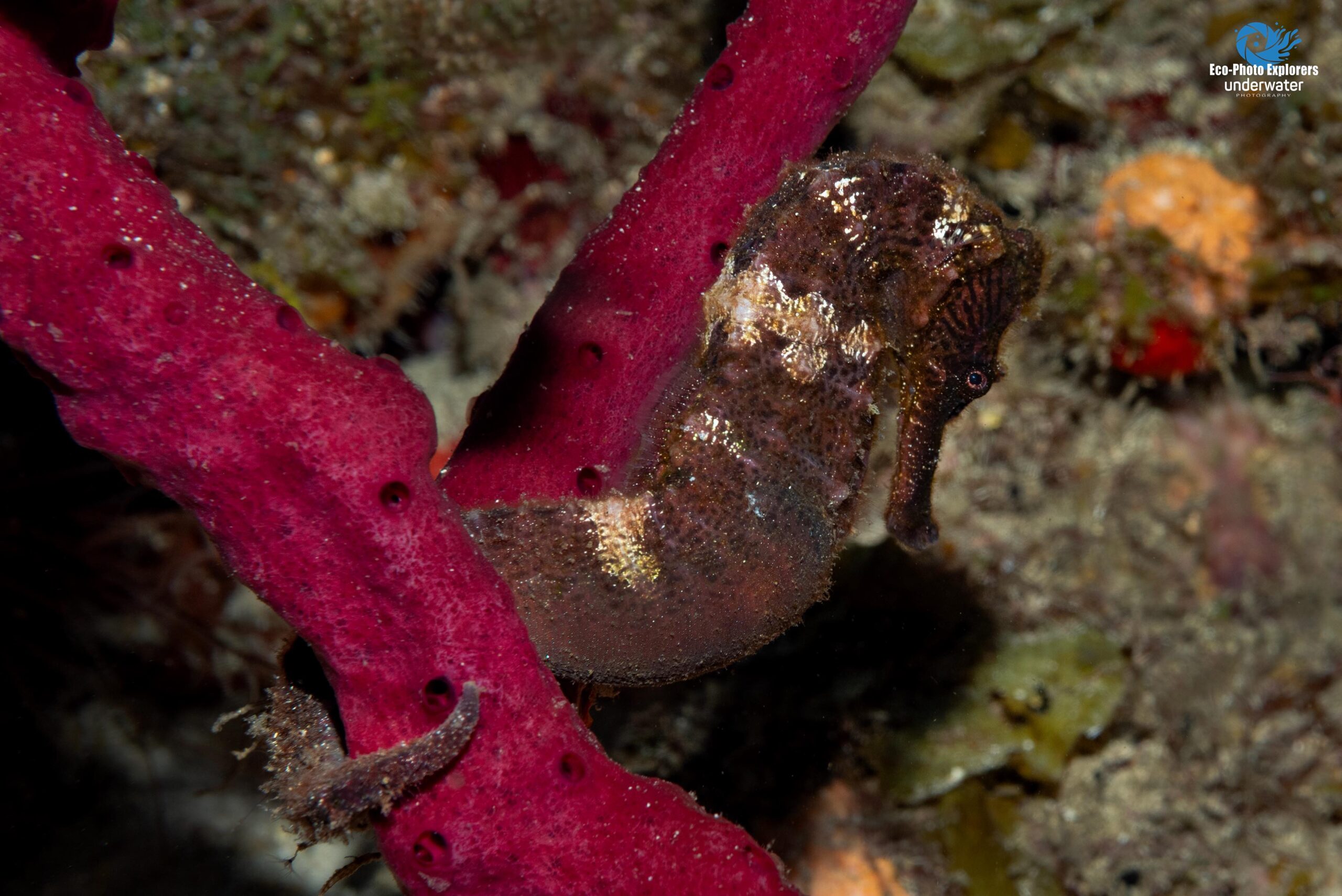
- The Longsnout Sea Horse is a shy denizen of the reefs
-
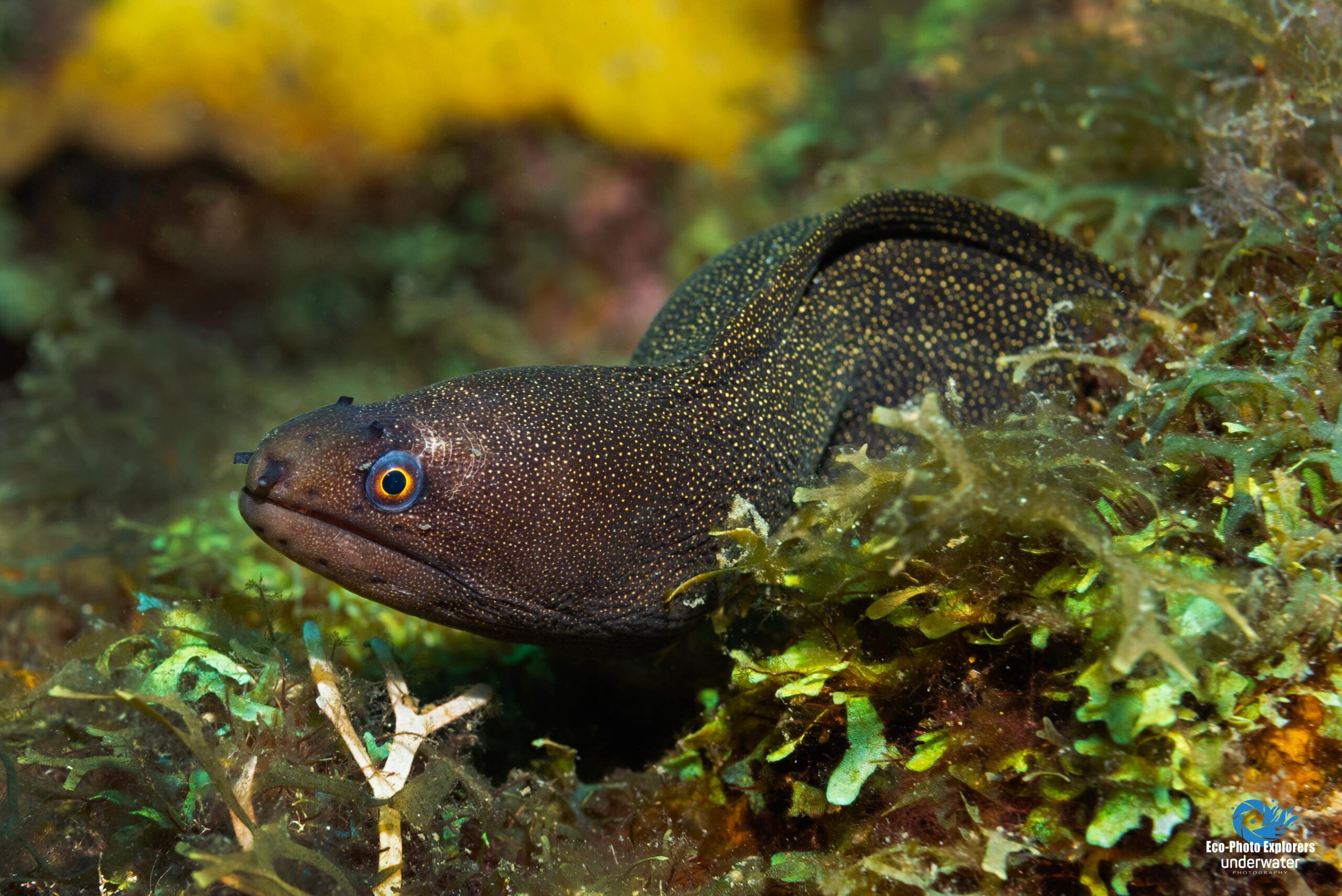
- Goldentail Moral Eels usually prowl at night
-
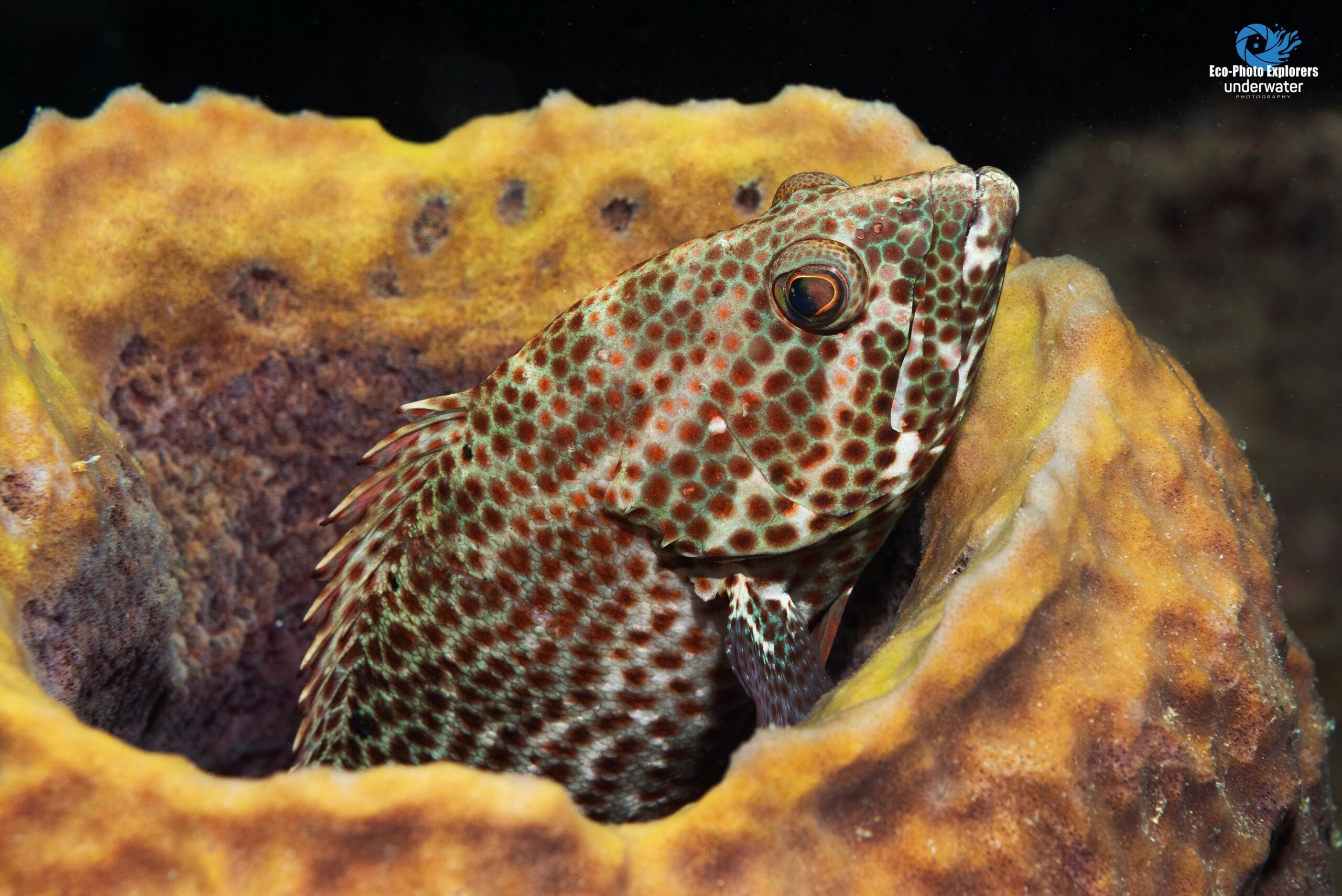
- A Red Hind peeks from the shelter of a barrel sponge
-
- A Banded Coral Shrimp waits for a host looking for its cleaning services
-
- A juvenile Spotted Drum fish
-
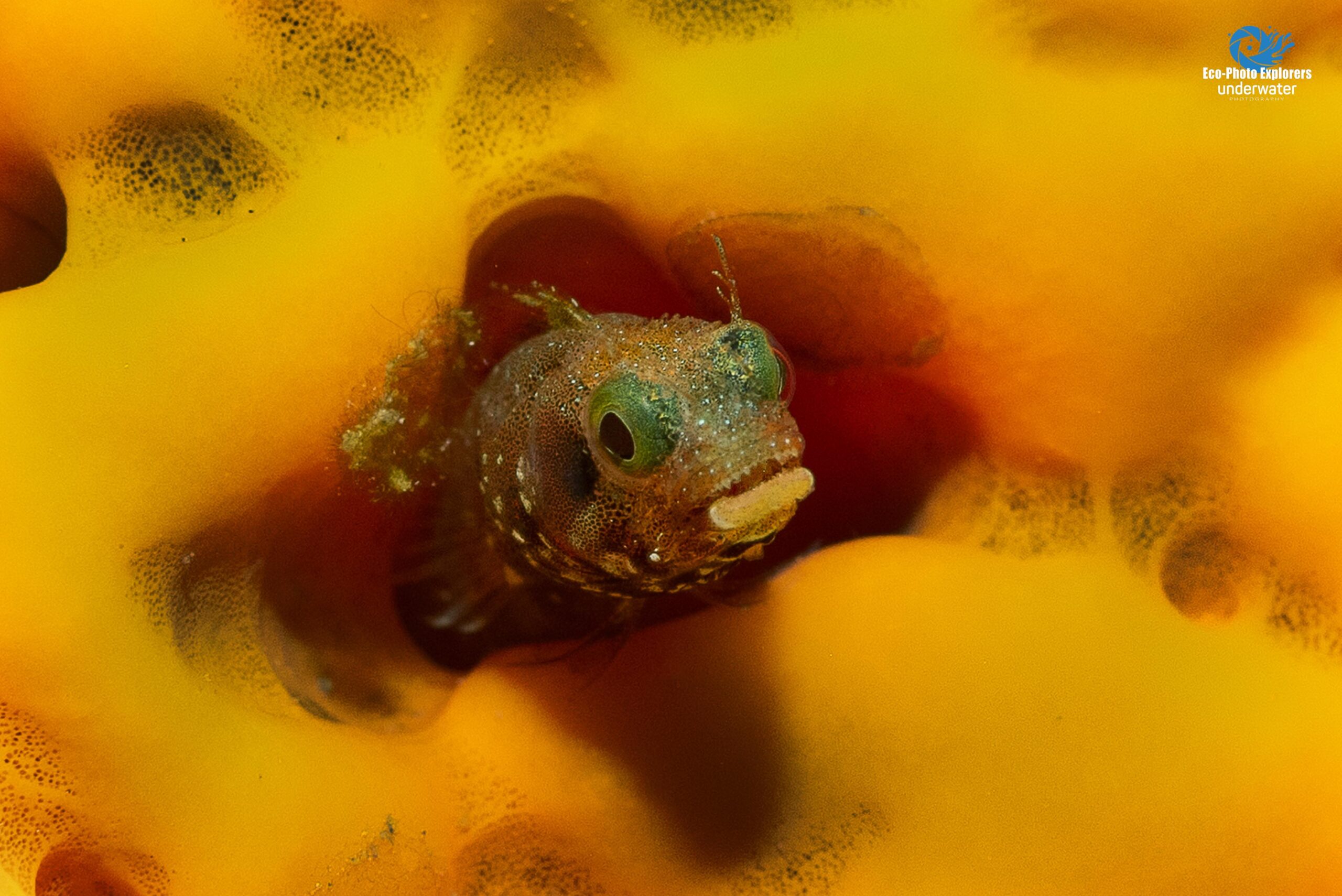
- Spinyhead Blennies can be found in tiny holes on coral heads and sponges
-
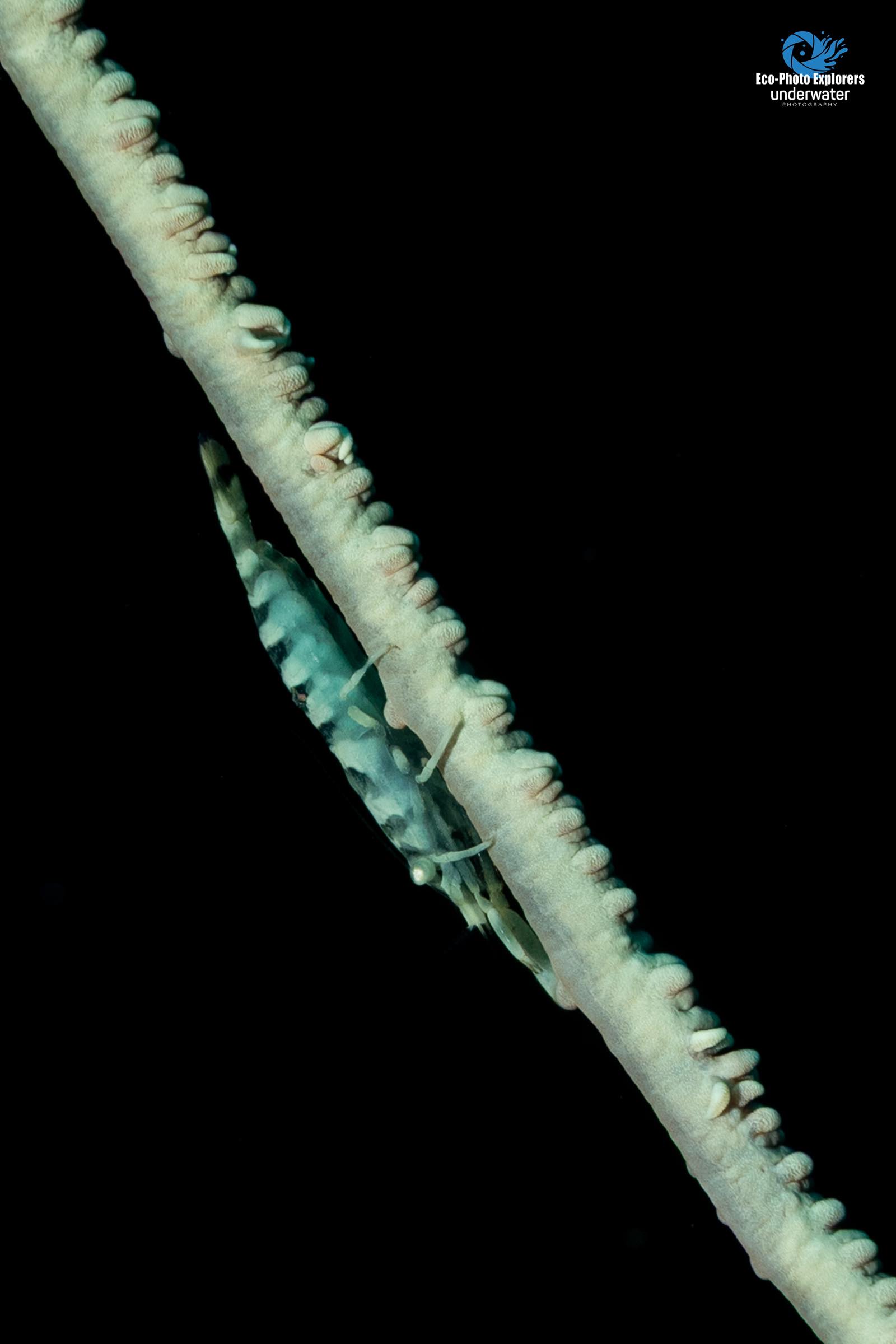
- Look very closely on whip corals to spot an Arrow Shrimp perfectly camouflaged
-
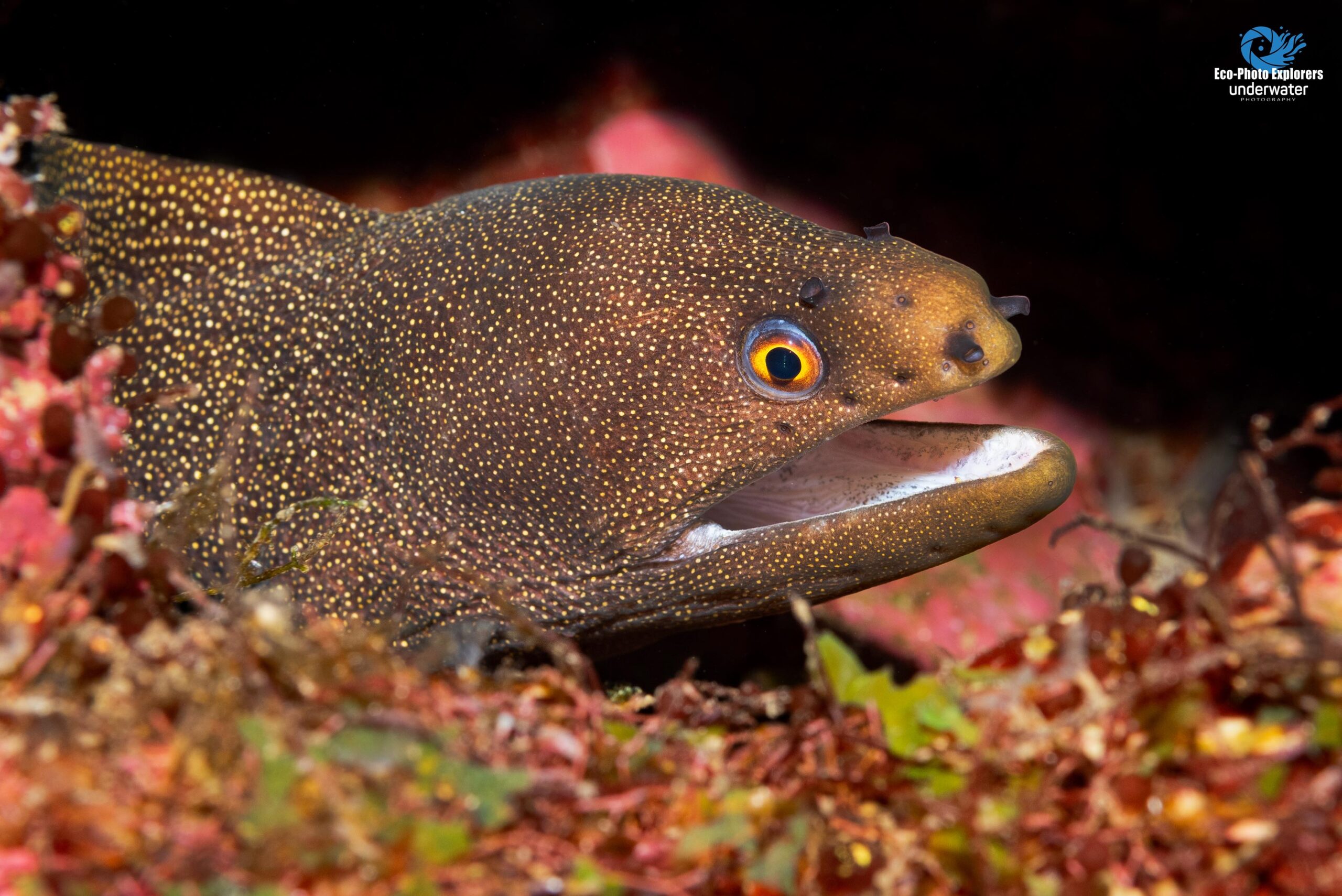
- Goldentail Moray Eels can be found on reefs shallower than 50 feet
-
- Lettuce Leaf Slugs grow to several inches in length
-
- Banded Coral Shrimp seemed to be everywhere on the reefs of Dominica
-
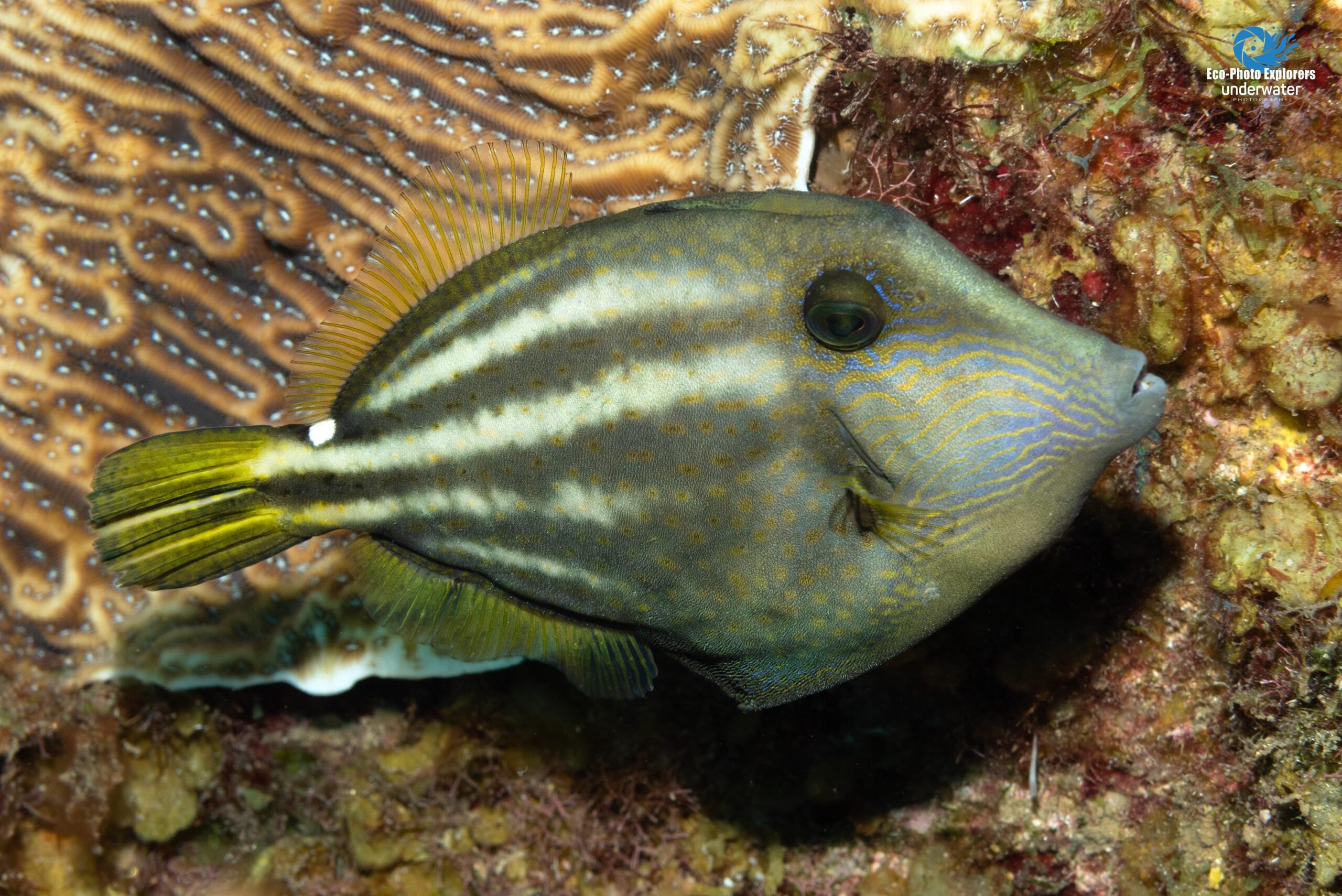
- An Orange-spotted Filefish photographed alongside some hard corals
-
- A Sharknose Goby photographed on a sponge
-
- Rare blue form of a Lettuce Sea Slug
-
- Look inside sponge tubes to find Golden Coral Shrimp
-
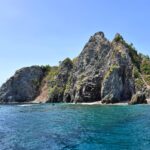
- Scotts Head, home to several world class dive sites
-
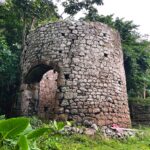
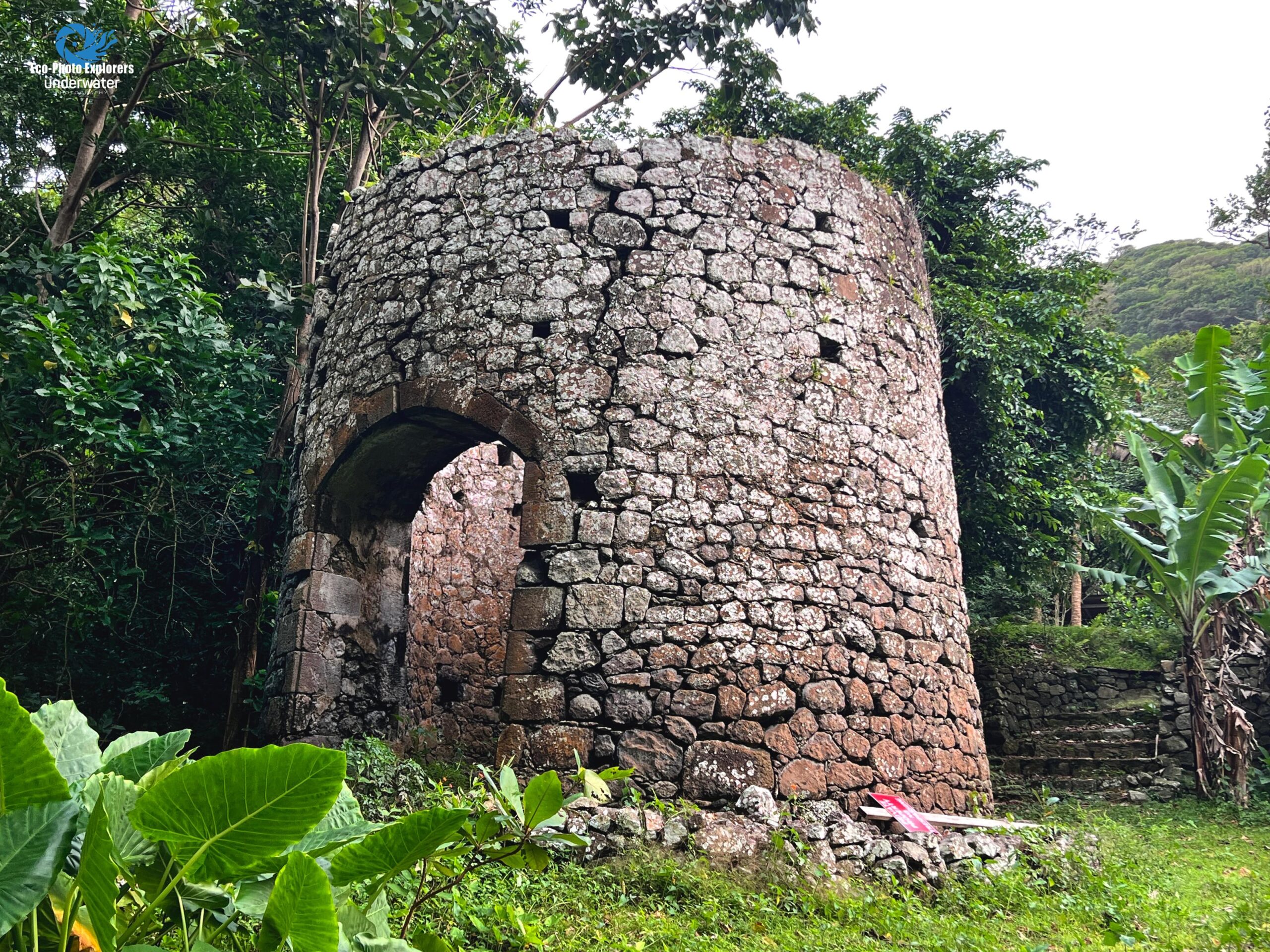
- Remains of an abandoned cocoa plantation
-
- Trafalgar Falls in Dominica
-
- The mountains and forests of Dominica